SALT KEEPSWHOLE NOT SLICEDCANNED HAM 2 YRWorks without power
Quick facts
- Keeps without a fridgeWhole dry salami 6 weeks; uncut country ham up to a year; canned ham 2 years
- RefrigeratedSliced salami 2 to 3 weeks; bacon 1 week; prosciutto 2 to 3 months
- Best storageCool, dry, hanging or wrapped in paper; fridge once cut
- Watch forSlime, sour or rancid smell, soft or fuzzy mold on the cut face
Where this sits on the food shopping list
Curing is how meat was kept before the freezer: salt pulls the water out, drying finishes the job, and the result hangs in a cool room for weeks or months. The modern store has three kinds that go by one name: dry-cured meats like salami, prosciutto and country ham, which keep without refrigeration while whole; cooked and brined meats like city ham, hot dogs and deli slices, which are fridge foods; and bacon, which is cured but still raw and keeps a week. Know which you have before you plan on it.
Which to buy
For the shelf: whole dry salami and whole dry-cured hams, bought uncut with the casing or rind intact, and canned ham, which is shelf-stable for two years unopened. Read the label: anything that says keep refrigerated is the second kind. For the fridge and freezer: bacon, cooked ham and sausage as you use them. Jerky is the dry route and has its own page.
How long it really lasts
By how it is kept
| Form | Label says | Real, stored well |
|---|---|---|
| Dry salami, whole, unopened | Date on the pack | 6 weeks on a cool shelf; 3 weeks refrigerated once cut |
| Dry salami or pepperoni, sliced | 2 to 3 weeks refrigerated; 1 to 2 months frozen | |
| Prosciutto, serrano, dry-cured, cut | 2 to 3 months refrigerated; 1 month frozen | |
| Country ham, uncut | Up to a year hanging in a cool dry room | |
| Canned ham, shelf-stable, unopened | 2 years | 2 years on the shelf; 3 to 4 days refrigerated once opened |
| Cooked ham, store-wrapped | 1 week refrigerated; 1 to 2 months frozen | |
| Bacon | 1 week refrigerated; 1 month frozen | |
| Hot dogs, deli meat, unopened | 2 weeks refrigerated |
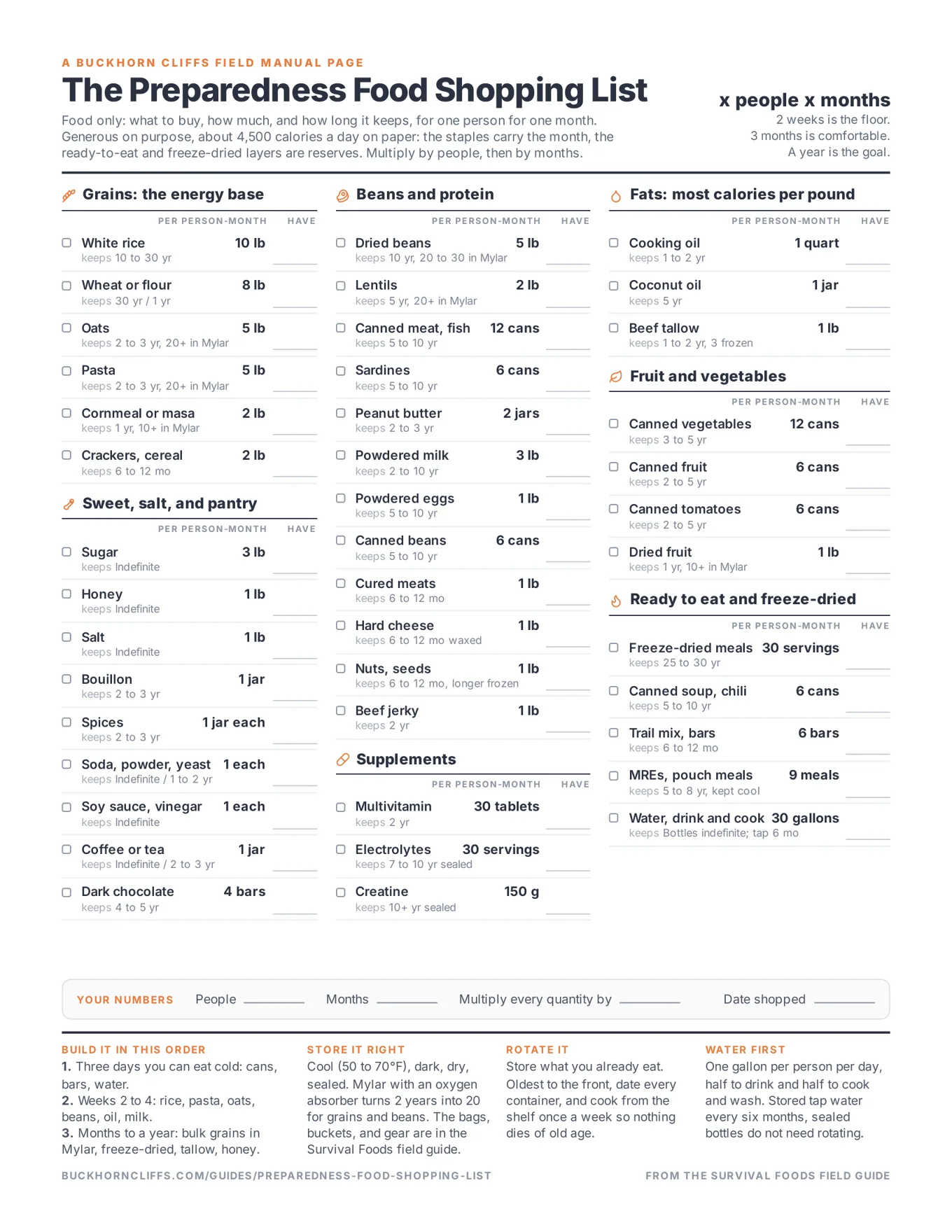
Free download
Get the one-page food shopping list
What to store, how much of it for one person for one month, and how long it keeps. One page with checkboxes, built from the Survival Foods field guide. Print it, multiply by your people and months, and take it to the store.
The PDF comes by email, with my newsletter now and then. Already on the list? You still get it. Read the full page.
How to store it
Whole dry-cured meat hangs or sits in a cool, dry, airy place, wrapped in paper or a cloth bag, never plastic, which traps moisture and grows the wrong mold. Once cut, the cut face is the weak point: press paper against it and refrigerate. Sliced cured meat is a fridge food from the first slice. Canned ham sits on the pantry shelf like any can. Bacon in the fridge in its pack, or frozen in portions.
How to tell it has turned
The white powdery mold on the casing of a dry salami is the cure working and wipes off. Fuzzy green, black or blue mold, especially on a cut face, means trimming deep or discarding. Slime, a sour or rancid smell, and a gray or green tint on the meat itself are the end. A country ham may show mold on the rind, which is scrubbed off with a stiff brush and vinegar before cooking; the meat under it's fine.
White powdery mold on a salami casing; mold scrubbed off a country ham rind; a dry salami that has hardened.
Slime, a sour or rancid smell, green or black fuzzy mold on the meat, or any refrigerated cured meat left above 40°F for more than two hours.
How much, and how to use it
Cured meat is dense: a pound of dry salami is about 1,800 calories and a lot of salt, which is why a little goes a long way with bread, beans and rice. Country ham is soaked overnight to pull salt before cooking. To cure your own, a pork belly with 2.5 percent of its weight in salt plus a measured curing salt, rubbed and refrigerated for a week, then rinsed and cooked or smoked, is bacon; the long dry cures need a cool, humid room and a scale, and the curing formulas are where the amounts live.
When the power goes out
Whole dry-cured meat and canned ham do not care about an outage. Sliced cured meat, cooked ham, hot dogs and bacon are fridge foods and follow the two-hour rule above 40°F; cook the bacon and eat the ham in the first day.
Shelf-life figures are from the Survival Foods field guide; fridge, freezer and pantry times are from the USDA cold and pantry storage charts. Run the look, smell, taste check before eating anything past its date.
Questions this answers
Tap a question for the short answer.
How do I tell if cured meats has gone bad?
Look for discoloration, sliminess, off-odors, or mold growth. Inspect the meat for any change in color or texture, and smell it for anything off.
How long do cured meats last?
A whole dry salami 6 weeks on the shelf and 3 weeks refrigerated once cut; sliced salami 2 to 3 weeks in the fridge; prosciutto cut 2 to 3 months; an uncut country ham up to a year hanging; canned ham 2 years unopened; bacon a week.
Which cured meats do not need refrigeration?
Whole, uncut dry-cured meats: dry salami, prosciutto, serrano and country ham, kept cool and dry in paper, and shelf-stable canned ham. Anything labeled keep refrigerated, and all sliced cured meat, is a fridge food.
How do I tell if cured meats have gone bad?
Slime, a sour or rancid smell, a gray or green tint, or fuzzy colored mold on the meat. The white powdery mold on a salami casing is normal and wipes off.
Keep going
Related to this
Membership · $49.95 per year
There is a lot more behind the lock
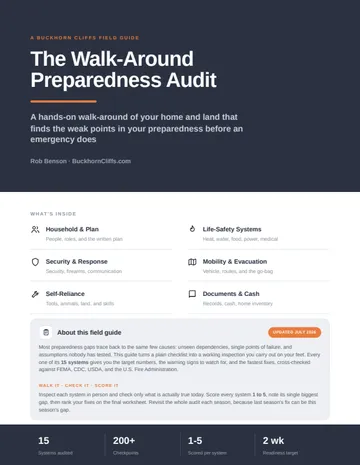
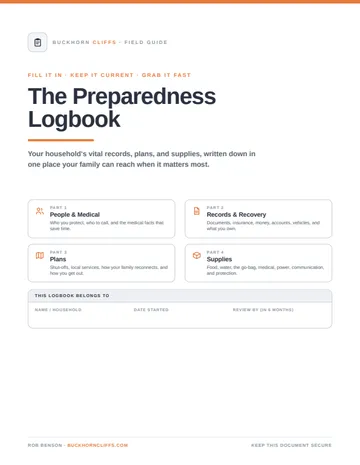
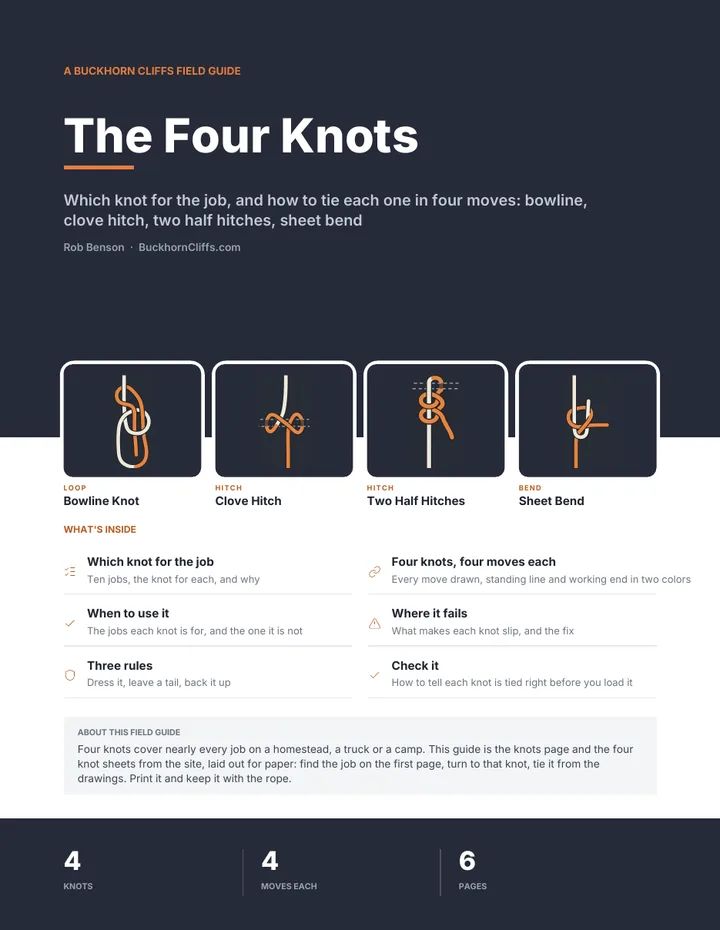
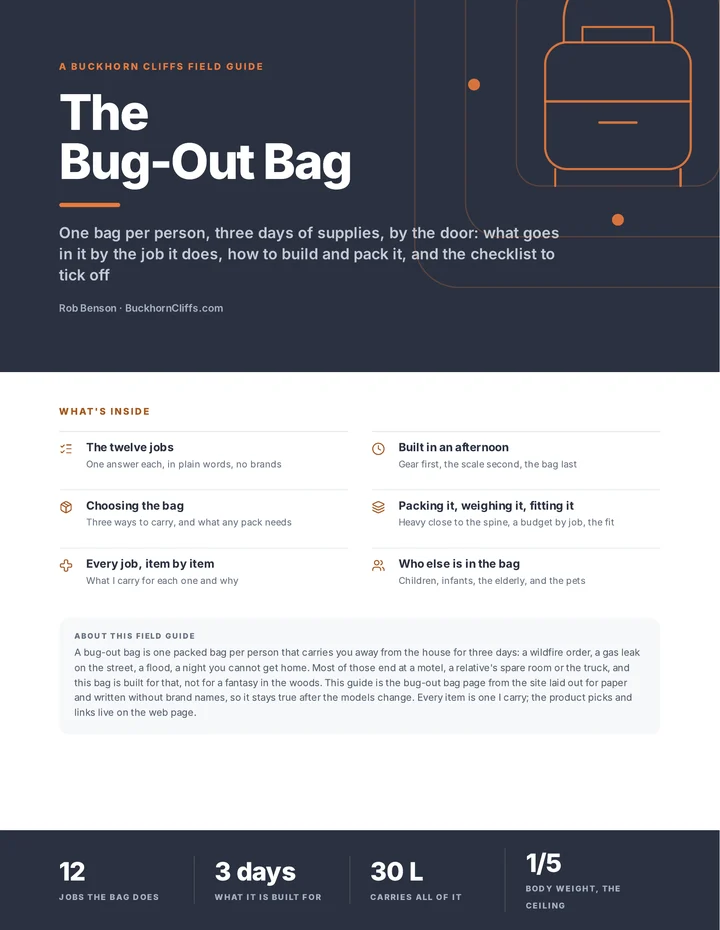
Every recipe and resource from the Prepper's Chemical Survival Guide, all eleven field guides to read here and download, the full audit and logbook, all twelve reference charts, and no ads.
My Manual · included
Build your own field manual
The most useful thing a membership gives you. Save any page on this site, recipes, charts, and whole field guides included. Arrange them in the order you want, name it, and print one manual with a cover and contents, or keep it as a PDF that opens with no signal.
- It works when this site does not
- Only your pages
- Anyone in the house can use it
- One current copy, not a pile of printouts
- The house binder
- A copy for the bug-out bag or truck
- A copy for family
- An offline PDF





Stay Ready
New entries, updates, and useful instruction.
Stay one step ahead on your preparedness journey.