Quick facts
- Buy firstWhere There Is No Doctor, Ball Complete Book of Home Preserving, Pocket Ref
- NavigationNational Geographic Road Atlas, Adventure Edition
- SurvivalU.S. Army Survival Manual FM 21-76, SAS Survival Handbook, Bushcraft 101
- Homestead
- The Encyclopedia of Country Living
- Back to Basics
- The Vegetable Gardener's Bible
- Medical
- Where There Is No Doctor
- The Survival Medicine Handbook
- Field Guide to Wilderness Medicine
- Fix itComplete Do-It-Yourself Manual, Ultimate Guide: Wiring, Handyman In-Your-Pocket
Every skill on this site was learned from somewhere, and for most of a century that somewhere was a book on a shelf. The phone is faster until it is dead, wet, out of signal or looking at a page that no longer exists, and a long outage is exactly the moment you need the canning times, the wire gauge, the dose for a child, or the road that goes around the closed one. A printed book needs nothing. These are the ones I keep, by the problem each one solves, and the three to buy first if you are starting the shelf from nothing.
Where There Is No Doctor, because a medical question with no answer is the worst one to have. The Ball Complete Book of Home Preserving, because a canning mistake can kill and the tested times are in there. Pocket Ref, because it answers the question behind almost every other job. The rest can wait for the next paycheck.
The six field guides on this site are built to sit on the same shelf: they are the checklists and tables; these books are the depth behind them. For the digital copy of everything, the backup laptop guide covers keeping a library on a drive that survives.
The book I wrote, and why it is on this shelf
From this shelf
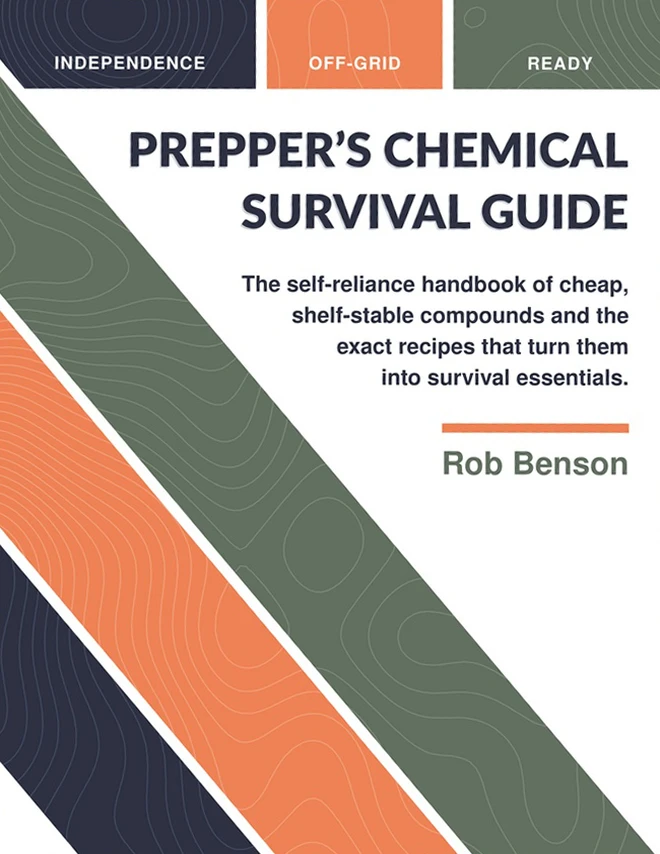
Prepper's Chemical Survival Guide
Every book above teaches a skill. This one fills the gap they all leave: what to do with the thirty-odd cheap chemicals that make water safe, food keep, wounds clean, tools rust-free and a house livable when the store is closed. I wrote it because the answers were scattered across old manuals, forum threads and the back of a bleach bottle, and none of them agreed on the amounts.
- Exact amounts. Every recipe gives the dose, the ratio and the steps, with the warnings that matter and nothing that does not.
- Six areas of the house. Water and food, body and health, home and shelter, storage, land and garden, tools and energy.
- Built for the counter. A hardcover that opens flat, with the shelf life of every compound and the pairs that must never share a shelf.
It sits between the medical books and Pocket Ref, and it is the one on this page you can read in full on this site: every compound is under compounds and the recipes are in formulas, with the member recipes carrying the same exact amounts as the print edition.
Finding the way
National Geographic Road Atlas, Adventure Edition
National GeographicEvery state, Canada, Mexico and Puerto Rico, with the public lands, forest roads and recreation sites that the gas station atlas leaves off, on paper heavy enough to mark up and a spiral binding that lays flat on the hood. It lives in the truck, and the routes I would use to leave the county in three directions are already drawn in it. Add a state gazetteer for the county roads and a topographic map of your own area, and you can navigate anything without a screen.
Staying alive outdoors
U.S. Army Survival Manual, FM 21-76
Department of the ArmyThe fundamentals, written for a soldier who has to stay alive in any climate: water, fire, shelter, food, navigation without a compass, signaling, and dangerous plants and animals, with the plain line drawings the Army has used since 1957. The Army has since renumbered its manual FM 3-05.70; the FM 21-76 reprint sold today is the older civilian edition, and it is still the best cheap survival book there is.
SAS Survival Handbook, Third Edition
John 'Lofty' WisemanThe same ground as the Army manual with better illustrations, more on climates and terrain, and chapters on disasters, first aid and camp craft that the Army leaves out. Wiseman ran survival training for the British SAS for years and the book reads like it. If you own one general survival book, this is the one; if you own two, this and the Army manual disagree just enough to be worth comparing.
Bushcraft 101
Dave CanterburyThe survival skills you will actually go out and practice on a weekend: the five C's of cutting, cover, combustion, containers and cordage, how to choose and use a knife, an axe and a saw, and how to set up a camp that works. It is a doing book rather than a reading book, and it pairs with the fire and knots guides here.
When All Hell Breaks Loose
Cody LundinSurvival at home rather than in the woods: water, sanitation, heat, light, food and the psychology of a family in a disaster, from a man who taught it for decades. Funny, blunt and more useful for a two week outage than any wilderness book.
Handbook of Knots
Des PawsonStep by step photographs of the knots that matter, from a professional ropemaker, organized by what the knot is for. The knots guide on this site is the short list; this is the whole reference.
Mountain States Medicinal Plants
Briana WilesA hundred wild medicinal plants of the Rockies and the intermountain West, with identification, ethical harvest and preparation as teas, tinctures and salves. Foraging guides must match your region and be written by someone who uses what they describe; this one is both. Buy the equivalent for where you live, because a plant book for the wrong region is a way to get poisoned.
Field Guide to Edible Wild Plants of Eastern and Central North America
Samuel ThayerThe eastern half of the country, from the forager who has done more to make wild food safe and practical than anyone writing today. Every plant has photographs at every stage, the look-alikes, and what to do with it once it is in the basket.
Pocket Guide to Field Dressing Game
GilbertWaterproof plastic pages, big game and birds in two sections, and the cuts drawn so you can follow them with bloody hands. It rides in the hunting pack. Meat that is dressed fast and clean is food; meat that is not is a loss, and the rifle setup guide is the front half of that job.
Growing and keeping food
The Encyclopedia of Country Living
Carla EmeryIt began as a mimeographed newsletter in the 1970s and grew over fifty years into the one book that covers a working homestead from end to end: garden, orchard, bees, chickens, goats, cows, milk, meat, grain, preserving, and what to do when it goes wrong. Nine hundred pages, and the index is where you start. If the shelf holds one homestead book, it is this one.
Back to Basics: A Complete Guide to Traditional Skills
Abigail Gehring, editorThe same ground as Emery with more photographs, more step by step sequences and less depth: a log cabin, a root cellar, cheese, soap, a smokehouse, a wood lot. The better book to hand a beginner, and the one that gets a project started before Emery gets it finished.
The Vegetable Gardener's Bible
Edward C. SmithThe wide raised bed, deep soil, organic method, with a crop by crop section that tells you when to plant, how far apart, what goes wrong and when to pick, for every vegetable you are likely to grow. It has stayed in print for twenty five years because it works in most of the country.
Ball Complete Book of Home Preserving
Judi Kingry and Lauren DevineFour hundred tested recipes with processing times for water bath and pressure canning, jams, pickles, salsas and sauces, from the company that makes the jars. Canning is the one kitchen skill where a guess can kill, and the tested times are here. The survival foods field guide covers what keeps and for how long; this book covers how to make it keep.
Fixing the house
The Complete Do-It-Yourself Manual
Family HandymanPlumbing, electrical, framing, drywall, roofing, doors, windows, floors, masonry, with more than three thousand photographs and drawings, written for the homeowner rather than the trade. When the plumber is not coming, this is the book open on the floor next to the leak.
Ultimate Guide: Wiring
Creative HomeownerResidential wiring to code, step by step with photographs: panels, circuits, receptacles, switches, lighting, GFCI and AFCI, and the generator transfer switch you will want the day the power goes out. Electrical work is the one house job where a mistake burns the house down or kills you; do it from the book, and know when to call the electrician.
Handyman In-Your-Pocket
Richard Young and Thomas GloverSeven hundred pages of building and repair tables in a shirt pocket: anchors, bolts, screws, lumber, concrete, roofing, plumbing, electrical, from the people who make Pocket Ref. It is the book you take to the job instead of the whole shelf. The spare parts field guide is what to have on hand; this is how to use it.
Treating the sick and hurt
Three books, covered in more depth in the medical books guide. They go with the training and the kit in the medical preparedness guide; a book without the supplies is a description of what you cannot do.
Where There Is No Doctor
David Werner, HesperianThe village health care handbook used in more than a hundred countries for fifty years. It assumes no hospital, no lab and few drugs, and it is written and drawn so that a person with no training can diagnose and treat the common things: infection, dehydration, fever, wounds, childbirth, and when to get help at any cost. The first book to buy on this page.
The Survival Medicine Handbook
Joseph and Amy AltonWritten by a physician and a nurse practitioner for exactly the situation the title describes: help is not coming. Trauma, infection, dental, chronic illness, medications and what to stock, and the honest limits of what an untrained person can do. It fills the gap between Where There Is No Doctor, which assumes a village, and a modern house with a good kit.
Field Guide to Wilderness Medicine
Paul AuerbachThe pocket version of the standard textbook on injuries and illness far from a hospital: fractures, bleeding, hypothermia, heat illness, altitude, bites, stings, water, and evacuation decisions. Dense and clinical, and the one to carry when the road is a day away.
The numbers behind everything
Pocket Ref, 4th Edition
Thomas GloverEight hundred pages of tables in a pocket: wire gauges and ampacity, bolt torque, pipe sizes and friction loss, lumber grades, concrete mixes, rope and chain strengths, first aid, weather, geology, Morse code, and the conversions and formulas that every other job on this page needs. It has been in every truck I have owned. When someone asks what one book they should own, this is the answer.
Keep the shelf dry, keep it where you can reach it in the dark, and read each book once before you need it, so you know what is in it and where. The what to stock guide and preparing your home are where the shelf fits in the rest of the plan.
Questions this answers
Tap a question for the short answer.
What are the best books for self-reliance?
Twenty-one, by the problem they solve. To find the way: a road atlas. To stay alive outdoors: the Army survival manual, the SAS handbook, Bushcraft 101, a knots book, and regional plant and field dressing guides. To grow and keep food: The Encyclopedia of Country Living, Back to Basics, The Vegetable Gardener's Bible, and the Ball preserving book. To fix the house: a DIY manual, a wiring guide and Handyman In-Your-Pocket. To treat the sick and hurt: Where There Is No Doctor, The Survival Medicine Handbook and the Field Guide to Wilderness Medicine. And Pocket Ref for the numbers everything else depends on, plus my own Prepper's Chemical Survival Guide for the compounds that make the rest work.
What survival books should I own in print?
The U.S. Army Survival Manual, FM 21-76, for the fundamentals in any terrain; the SAS Survival Handbook for the same ground with better illustrations and a wider scope; Bushcraft 101 for the skills you will actually practice on a weekend; and When All Hell Breaks Loose for the disaster at home rather than in the woods. Add a knots book and the plant and game guides for your region.
What is the best medical book for when there is no doctor?
Where There Is No Doctor, the village health care handbook used around the world for fifty years. It assumes no hospital, no lab and few drugs, and it is written so a person with no training can follow it. Pair it with The Survival Medicine Handbook, which is written for exactly the situation the title describes, and the Field Guide to Wilderness Medicine for injuries in the field. The medical books guide covers all three in more depth.
What books should I have if the internet goes down?
Whatever you would otherwise look up. A road atlas, because the phone map dies with the signal. A medical handbook, because that is the search you cannot afford to lose. A preserving book with tested processing times. A DIY manual and a wiring guide. And Pocket Ref, which holds the wire gauges, torque specs, pipe sizes, conversions and formulas that every other job needs.
What is a good homesteading reference book?
The Encyclopedia of Country Living, by Carla Emery. It began as a mimeographed newsletter in the 1970s and grew over fifty years into the single book that covers gardening, animals, milk, meat, grain, preserving and the rest of a working homestead. Back to Basics covers the same ground with more pictures and less depth, and is the better book to hand a beginner.
What road atlas should I keep for emergencies?
The National Geographic Road Atlas, Adventure Edition. It covers all fifty states, Canada, Mexico and Puerto Rico, with public lands, back roads and recreation sites the gas station atlases leave off, and it has a spiral binding and a plastic cover that survive the truck. Mark your routes in it now.
Which self-reliance books should I buy first?
Three. Where There Is No Doctor, because a medical question with no answer is the worst one to have. The Ball Complete Book of Home Preserving, because a canning mistake can kill and the tested times are in there. And Pocket Ref, because it answers the question behind almost every other job. Everything else on this list can wait for the next paycheck.
Keep going
Related to this
Membership · $49.95 per year
There is a lot more behind the lock
Every recipe and resource from the Prepper's Chemical Survival Guide, all six field guides to read here and download, the full audit and logbook, all twelve reference charts, and no ads.
My Manual · included
Build your own field manual
The most useful thing a membership gives you. Save any page on this site, recipes, charts, and whole field guides included. Arrange them in the order you want, name it, and print one manual with a cover and contents, or keep it as a PDF that opens with no signal.
- It works when this site does not
- Only your pages
- Anyone in the house can use it
- One current copy, not a pile of printouts
- The house binder
- A copy for the bug-out bag or truck
- A copy for family
- An offline PDF






Stay Ready
New entries, updates, and useful instruction.
Stay one step ahead on your preparedness journey.