Quick facts
- TargetThree days with nothing coming in, then build to two weeks
- WaterOne gallon per person per day stored, plus a filter for what you can find
- Generator
- Outside
- 20 feet from the house
- exhaust pointed away
- never in a garage
- HeatOnly heaters rated for indoor use inside; CO alarm on every level
- RadiosA NOAA weather radio to listen, FRS or GMRS handhelds to talk
- Paper
- Copies of IDs
- insurance
- prescriptions
- contacts in a fire safe
- on a drive
Most emergencies a household will ever face look the same from the inside: the power is out, the tap may or may not run, the phones are unreliable, the roads are bad, and it lasts somewhere between an afternoon and two weeks. An ice storm, a wildfire evacuation order, a boil notice, a grid failure in a heat wave and a supply disruption all land on the same seven systems. Cover those seven and you are prepared for nearly everything without preparing for anything in particular.
For each system below there is a first move you can make this month for little money, and a full build for later. Do the first moves across all seven before you build any one of them out. A house with a $3,000 generator and no stored water is not prepared.
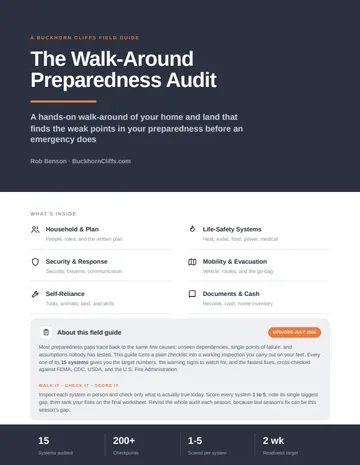
Three days with nothing coming in: no grid, no tap, no phone, no store. That covers almost every outage a family will see. Then build toward two weeks, which covers the ones that make the news. The walk-around audit field guide is the room by room version of this page.
1. Light and power
a headlamp for every person, a lantern for the kitchen table, and a power bank that charges every phone in the house twice. Under $100 and it covers the first night of any outage.
Full build, in order of cost:
Outside, at least 20 feet from the house, exhaust pointed away from every window and door. Never in a garage, a basement, a carport or on a porch, even with the doors open. A battery carbon monoxide alarm on every level of the house, tested when the generator comes out. Carbon monoxide kills more people after storms than the storms do.
The full kit list is in the power outage gear guide, and the blackout scenario walks through the first 72 hours.
2. Water
a case of bottled water per person and a 5 gallon food grade jug per person, filled and dated. One gallon per person per day is the floor for drinking and cooking; two is comfortable.
two weeks stored, in a mix of small bottles you can carry and larger containers; a gravity filter for water you collect from a creek, a pool, a rain barrel or a water heater; and a bottle of plain unscented bleach or a jar of calcium hypochlorite for treating in bulk. Boiling for one full minute, three minutes above 6,500 feet, handles everything biological and needs only a stove.
The clean water guide matches methods to sources, how water becomes unsafe explains what you are treating for, and the water outage scenario is the day by day.
Free download
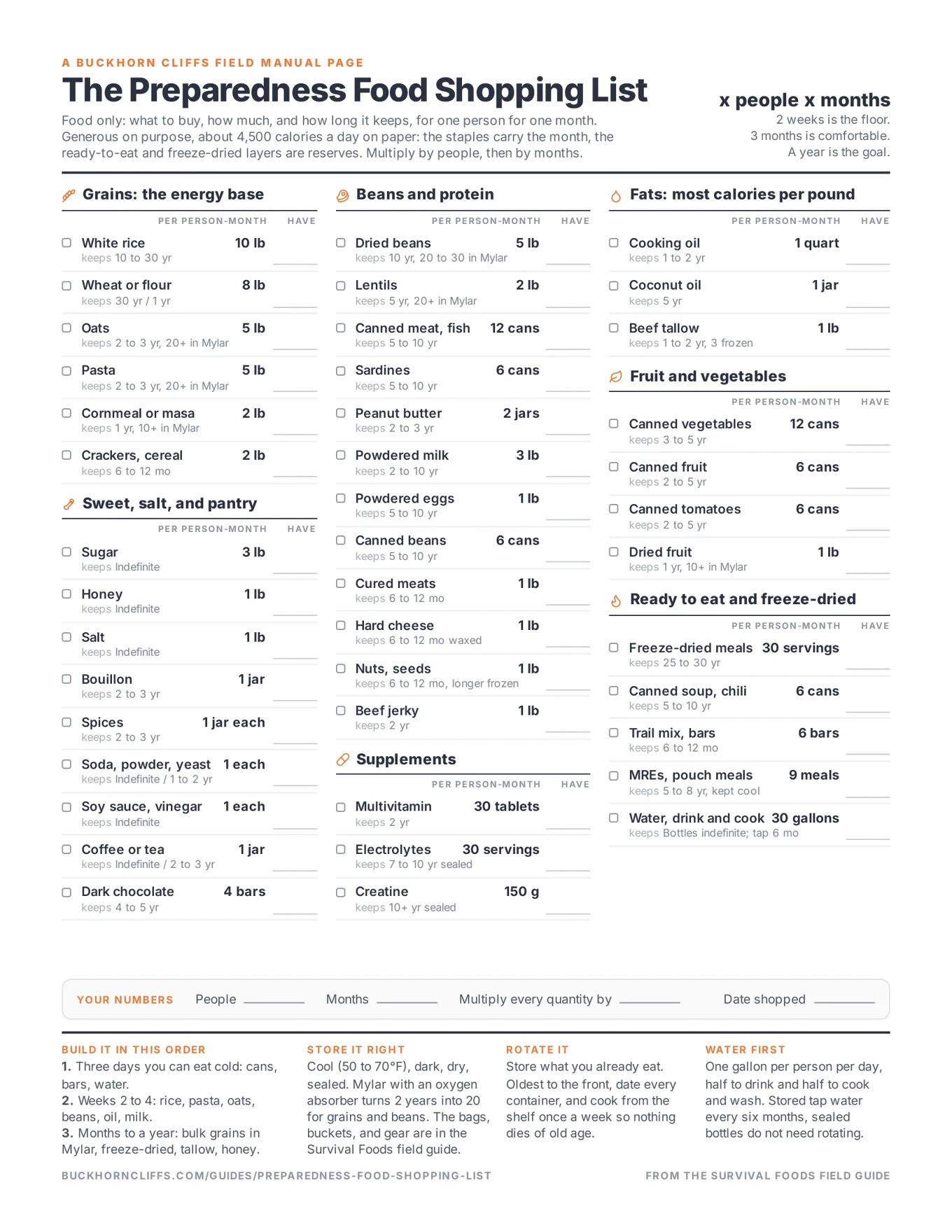
Get the one-page food shopping list
What to store, how much of it for one person for one month, and how long it keeps. One page with checkboxes, built from the Survival Foods field guide. Print it, multiply by your people and months, and take it to the store.
The PDF comes by email, with my newsletter now and then. Already on the list? You still get it. Read the full page.
3. Food
one extra week of the food you already eat, bought a few items at a time, with a manual can opener taped to the shelf. Rotate it into the kitchen and replace it; nothing expires and nothing is wasted.
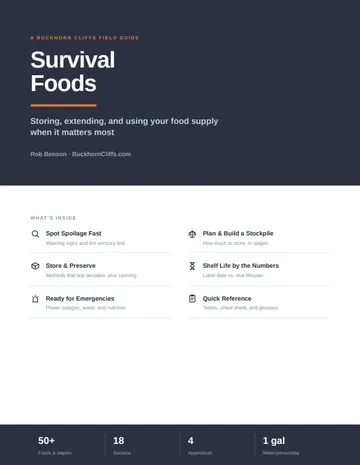
a three month pantry of shelf stable food you cook from, a long term layer of rice, beans, oats, salt, sugar, oil and freeze dried food in sealed containers, and the fuel to cook it. The what to stock guide is the list, the survival foods field guide covers what keeps and for how long, and the freeze dried foods page covers the long layer.
Three rules that save a pantry: store what you eat, keep it cool and dark, and write the date on everything. A freezer full of meat is a week of food in a summer outage if you do not open the door, and a season of food if a generator runs it two hours a day.
4. Heat and cooking
a plan for one warm room and a way to boil water. Blankets for the doorways, sleeping bags rated below freezing, and a two burner propane camp stove with a few 1 pound bottles, used at an open window or on the porch.
a wood stove if you can install one, with a season of wood; the wood stove installation guide covers the job. Where you cannot, a vent-free propane heater rated for indoor use with an oxygen depletion sensor, a cracked window, a CO alarm, and never left burning while anyone sleeps. Propane for both heat and cooking, stored in 20 pound or larger tanks; self-sufficiency with propane covers tanks, regulators and how long a tank runs.
Tanks live outdoors, upright, in the shade, away from the house, valve closed, cap on. Never in the house, a basement, a garage or a vehicle. A 20 pound tank holds about 4.7 gallons and is stamped with a manufacture date on the collar; it needs recertification 12 years after that date or refill stations will refuse it.
Outdoor heaters, grills, camp stoves and generators stay outside. Cooking fuel and fire compares the fuels, and a fire suppressant for the cooking area is a ten minute project worth doing. The winter storm scenario puts it all in order.
5. Communication
a NOAA weather radio with a hand crank and a battery, and an out-of-state contact every family member knows to text. Texts often get through when calls do not.
a pair of FRS handhelds for the house and the neighbors, no license needed and about a mile of real range; GMRS radios with the ten year family license for several miles and access to repeaters; a ham license for anyone in the house who wants real reach. Agree on a channel and check-in times now. GMRS versus FRS explains the choice and how to communicate with no cell or internet is the full plan. Keep a spare radio and a spare phone in a Faraday bag if you are worried about the rare event that takes out electronics.
6. Security
a deadbolt with a 1 inch throw on every exterior door, 3 inch screws in the strike plates and hinges, and the habit of locking them. Most break-ins are a kicked door; the long screws are what stop it.
solar motion lights at every entry and along the drive, which keep working in an outage; battery or solar cameras you can check from a phone; window film or bars where the ground floor is exposed; and a dog. In a long outage the biggest security move is not hardware, it is quiet: a generator and bright windows in a dark neighborhood draw attention, so run what you need and no more.
Firearms belong in this plan only with training, secure storage and the law where you live. The home security and defense guide covers the layers, the two-rifle setup covers a first rifle purchase, and proper ammo storage covers keeping ammunition dry and locked.
7. Medical
a real first aid kit with a pressure bandage and a tourniquet, thirty days of every prescription in the house, and one person who has taken a Stop the Bleed or Red Cross first aid and CPR class.
the medical preparedness guide, which covers the kit, the training and the reference books, and the no doctor scenario for when help is more than an hour away. Keep the consumables list stocked; the kit is only as good as what is still in it.
The plan, the paper and the neighbors
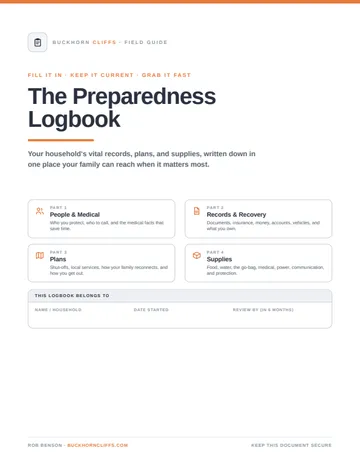
What you have, where it is, when it was checked and what is missing. A plan that lives in one person's head leaves with that person. The preparedness logbook is the printed version, built to sit with the document box.
This month
- Headlamp per person, lantern, power bank
- Bottled water and a filled 5 gallon jug per person
- One extra week of food you already eat, manual can opener
- Blankets for doorways, cold rated sleeping bags, camp stove and fuel
- NOAA weather radio, out-of-state contact agreed
- Deadbolts and 3 inch strike plate screws on every exterior door
- First aid kit with tourniquet, 30 days of prescriptions
- Battery CO alarm on every level, smoke alarms tested
- Document box started, cash in small bills
- Names and skills of five neighbors written down
Ten items, one weekend, a few hundred dollars. Then build each system out, one at a time, starting with whichever one your house is weakest on.
Questions this answers
Tap a question for the short answer.
How do I prepare my home for a power outage?
Cover seven systems in order: light and power, water, food, heat and cooking, communication, security, medical. For each one, make the first move this month: headlamps and a power bank, a week of stored water, a shelf of food you already eat, a safe indoor heat plan, a weather radio, locks that work, a real first aid kit. Then build each system out toward two weeks. A house that runs three days with nothing coming in handles almost every outage a family will see.
What backup power options work for a home?
In order of cost: a power station charged from the wall or a folding solar panel for phones, radios, lights and a CPAP; a portable gas or dual fuel generator for the fridge, freezer and furnace blower; a standby generator or a battery system with solar for the whole house. The generator runs outside, at least 20 feet from the house with the exhaust pointed away, never in a garage or on a porch, with a battery CO alarm on every level of the house. The solar power basics guide covers sizing.
How do I purify water without electricity?
Store it first: one gallon per person per day, two weeks if you can, in food grade containers. For water you collect, a gravity filter handles bacteria and protozoa; boiling for one minute (three above 6,500 feet) handles everything biological; plain unscented bleach at 8 drops per gallon, or calcium hypochlorite, handles it in bulk. The clean water guide covers which method fits which water.
How do I heat my house without power?
Close off one room, hang blankets over the doorways, and heat that room. A wood stove is the best answer where you can install one. Otherwise only a heater rated for indoor use, such as a vent-free propane heater with an oxygen sensor, with a window cracked and a CO alarm running, and never left burning while you sleep. Outdoor heaters, camp stoves, grills and generators stay outside; carbon monoxide from them kills people every winter storm.
How do I communicate when cell service is down?
A NOAA weather radio, hand crank or battery, to hear what is happening. FRS handhelds to talk to the neighbors and the family within a mile or two; GMRS with a license for more range and repeaters; a ham license for real reach. Agree on a channel and check-in times before you need them, and keep an out-of-state contact everyone texts, because texts often get through when calls do not.
How do I make my home more secure in an emergency?
Start with the doors: a deadbolt with a 1 inch throw, 3 inch screws in the strike plate and hinges, and a locked door you actually lock. Then light: solar motion lights at every entry, which keep working in an outage. Then eyes: battery or solar cameras you can check from a phone. In a long outage the biggest security move is quiet; a generator and lights in a dark neighborhood draw attention, so run what you need and no more.
Where should I store propane tanks?
Outdoors, upright, in the shade, on a level surface away from the house, with the valve closed and the cap on. Never in the house, a basement, a garage or a vehicle. A 20 pound tank holds about 4.7 gallons; check the date stamped on the collar, because tanks need recertification 12 years after manufacture and refill stations will refuse an expired one.
What documents should I keep in an emergency kit?
Copies of photo IDs, birth certificates, passports, insurance policies with the policy numbers and claim phone numbers, deeds and titles, prescription lists, vaccination records, and a contact list on paper. Keep them in a fireproof, waterproof box you can carry, with the same set scanned onto an encrypted drive and a copy with someone out of the area.
Keep going
Related to this
Membership · $49.95 per year
There is a lot more behind the lock
Every recipe and resource from the Prepper's Chemical Survival Guide, all six field guides to read here and download, the full audit and logbook, all twelve reference charts, and no ads.
My Manual · included
Build your own field manual
The most useful thing a membership gives you. Save any page on this site, recipes, charts, and whole field guides included. Arrange them in the order you want, name it, and print one manual with a cover and contents, or keep it as a PDF that opens with no signal.
- It works when this site does not
- Only your pages
- Anyone in the house can use it
- One current copy, not a pile of printouts
- The house binder
- A copy for the bug-out bag or truck
- A copy for family
- An offline PDF
Stay Ready
New entries, updates, and useful instruction.
Stay one step ahead on your preparedness journey.