Quick facts
- Tier 1 foods
- White rice
- dry beans
- lentils
- rolled oats
- pasta without egg
- wheat berries
- Moisture limitApproximately 10 percent or lower
- Absorber, 1 gallon bag300 to 500 cc
- Absorber, 5 gallon bag1500 to 2000 cc
- Standard thickness5 mil
- Unsafe with absorbers
- Fresh meat
- cheese
- bread
- warm or high moisture foods
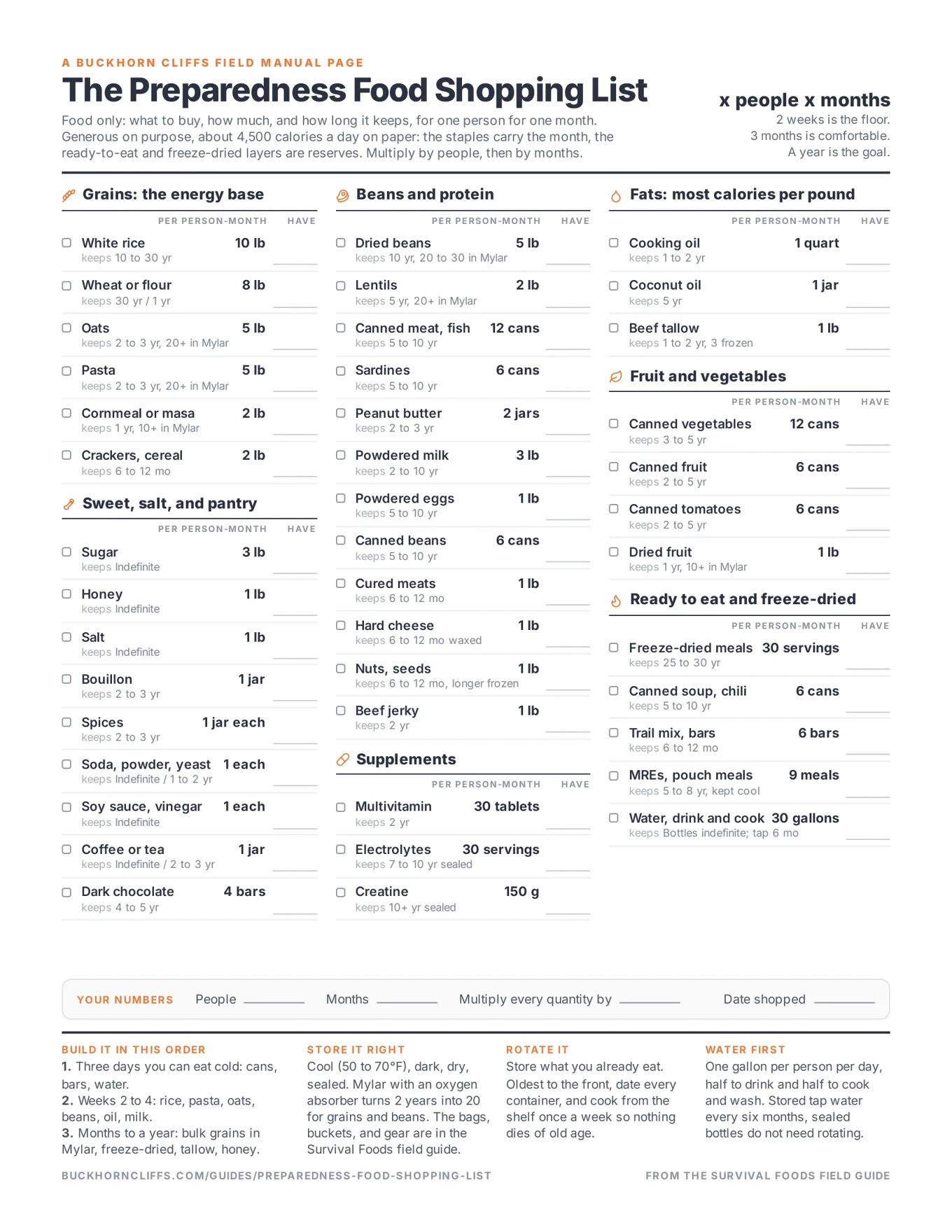
The food shopping list: what to buy, how much, shelf life
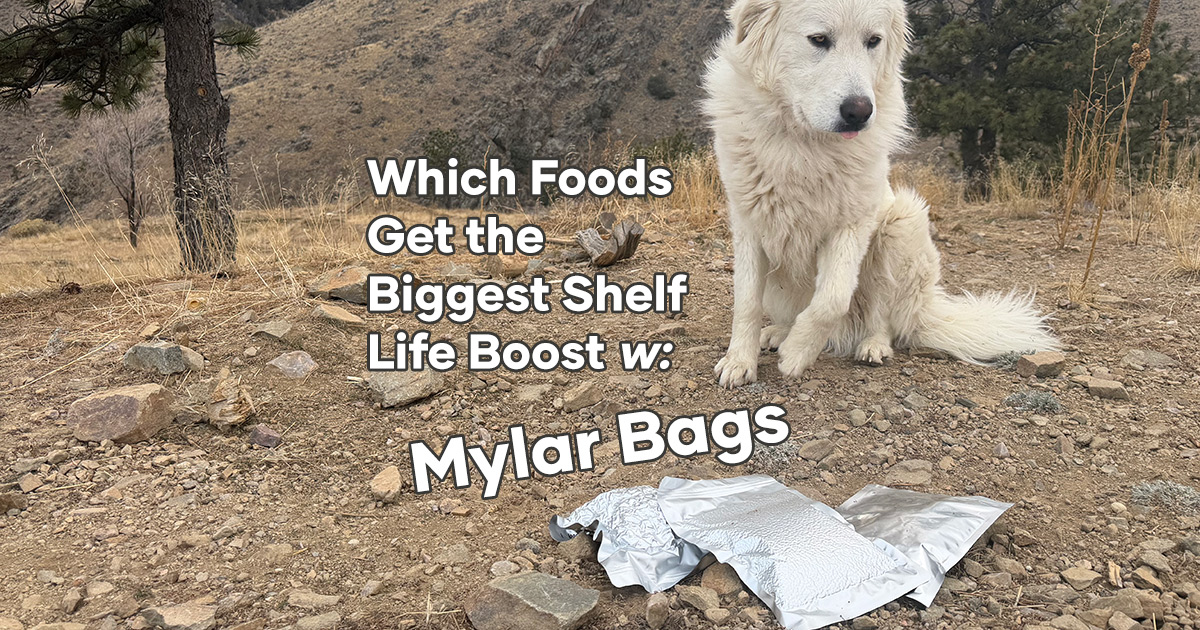
Mylar bags are one of the most effective tools available for long term food storage, but only when they’re used with foods that actually respond to oxygen control. Mylar itself does not preserve food. It creates a barrier. The food type, moisture level, fat content, storage temperature, and sealing method determine the result.
This guide explains how mylar works, which foods benefit most, which foods see limited improvement, and the details that determine whether storage succeeds or fails.
What Mylar Actually Does
Mylar is a polyester film laminated with aluminum. That aluminum layer drastically reduces oxygen transfer, moisture vapor transfer, and light exposure. Standard plastic bags allow slow oxygen migration. Mylar slows that movement enough that oxygen absorbers can reduce oxygen to extremely low levels and keep it there.
Mylar does not remove moisture. It does not sterilize food. It does not stop degradation caused by heat or fat oxidation.
Oxygen Absorbers and Why They Matter
Oxygen absorbers remove free oxygen inside a sealed bag through an iron oxidation reaction. They do not remove air. Nitrogen remains in the bag and is harmless.
Low oxygen environments:
- Slow oxidation
- Prevent insect survival and reproduction
- Reduce nutrient degradation
- Limit mold growth in dry foods
Oxygen absorbers only work correctly when:
- The food is dry
- The bag is properly heat sealed
- The absorber is sized correctly
- The food temperature is stable
Free download
Get the one-page food shopping list
What to store, how much of it for one person for one month, and how long it keeps. One page with checkboxes, built from the Survival Foods field guide. Print it, multiply by your people and months, and take it to the store.
The PDF comes by email, with my newsletter now and then. Already on the list? You still get it. Read the full page.
Moisture Requirements
For safe and effective reduced oxygen storage, food moisture should be approximately 10 percent or lower. Higher moisture foods stored in low oxygen environments can support dangerous bacterial growth.
If there is any uncertainty about moisture content, the food should not be stored with oxygen absorbers.
Food Ranking by Mylar Effectiveness
Tier 1: Massive Benefit
These foods are dry, low fat, and primarily degrade due to oxygen exposure. When sealed in mylar with oxygen absorbers and stored cool and dark, shelf life commonly reaches multiple decades.
- White rice
- Dry beans
- Lentils
- Split peas
- Rolled oats
- Pasta without egg
- Wheat berries
- Cornmeal
- Dehydrated vegetables, dried until brittle
- Dehydrated fruit, only if dried crisp enough to snap. Chewy or leathery home-dried fruit holds too much moisture for an oxygen absorber.
- Nonfat powdered milk
Freeze dried foods packaged by the end user
Freeze dried foods with no added moisture perform exceptionally well when packed into mylar by the user.
- Freeze dried vegetables
- Freeze dried fruit
- Freeze dried meat
- Freeze dried cheese
- Fully dry freeze dried meals
Freeze drying removes nearly all water. Oxygen exposure becomes the primary driver of quality loss. Mylar with oxygen absorbers creates a stable environment suitable for long term storage.
Factory sealed freeze dried foods already contain a low oxygen environment created during manufacturing. Additional mylar mainly improves physical protection and environmental buffering.
Tier 2: Moderate Benefit
These foods benefit from oxygen reduction but contain oils or mixed ingredients that degrade over time even under good storage conditions. Granola, nuts and some baking mixes can also sit above the 10 percent moisture limit, so only use absorbers on the ones you know are dry.
- Brown rice
- Whole wheat flour
- Granola
- Nuts and seeds
- Baking mixes
- Cocoa powder
- Textured vegetable protein
Quality decline occurs gradually. Rotation remains necessary.
Tier 3: Minor Benefit
These foods are typically sealed inside their own packaging. Oxygen trapped inside the original wrapper remains present. Mylar improves external protection but has limited impact on internal degradation.
- Packaged meat sticks
- Jerky
- Energy bars
- Trail mix
- Crackers
- Chips
- Candy
Mylar use here supports organization, light control, and pest resistance.
Tier 4: Little to No Benefit
These items are already sealed in packaging designed for long shelf life or are limited by factors unrelated to oxygen exposure.
- Canned foods
- Factory sealed retort pouches
- Wet foods
External bagging can help with corrosion protection in harsh environments but does not extend internal shelf life.
Tier 5: Unsafe With Oxygen Absorbers
Reduced oxygen storage is inappropriate for moist or fresh foods.
- Fresh meat
- Fresh cheese
- Fresh bread
- Home cooked meals that are not fully dehydrated
- Warm foods
- High moisture foods
Low oxygen combined with moisture creates conditions that can support dangerous bacterial growth.
Bag Thickness and Size
Common mylar thicknesses:
- 5 mil is standard for food storage
- 7 mil provides additional puncture resistance
- 8 mil provides more tear resistance and holds up better during packing and handling
- 10 mil is heavy duty and resists punctures from sharp or dense foods, but needs solid heat sealing technique
- 12 mil is extra heavy duty for rough handling, frequent moving, and higher puncture risk contents
- 14+ mil is industrial grade and overkill for most pantry storage, used when durability matters more than cost
Bag size should match usage patterns. Smaller bags reduce oxygen exposure after opening. Larger bags reduce packaging material but require better planning.
Oxygen Absorber Sizing
General guidance:
- 1 gallon bag: 300 to 500 cc
- 5 gallon bag: 1500 to 2000 cc
Absorber requirements vary by food density and headspace. More absorber capacity does not cause harm for dry foods. Salt and sugar are the exception: they need no absorber at all and can set into a brick with one.
Heat Sealing
A continuous, solid seal is required. Acceptable tools include:
- Household iron
- Hair straightener
- Impulse sealer
The seal should appear smooth and uniform. Wrinkles or gaps compromise the barrier.
Storage Environment
Long term success depends on:
- Low temperature
- Low humidity
- Darkness
- Minimal temperature fluctuation
Heat accelerates degradation even in low oxygen environments. Cool storage dramatically extends shelf life.
Buckets and Secondary Protection
Mylar bags benefit from being placed inside food grade buckets. Buckets protect against:
- Rodents
- Physical puncture
- Crushing
- Light exposure
The mylar preserves the food. The bucket protects the mylar.
Common Failures
- Storing moist food with oxygen absorbers
- Incomplete heat seals
- Undersized oxygen absorbers
- High storage temperatures
- Storing fatty foods as if they were dry staples
- Relying on mylar alone without moisture control
Practical Starting Order
For a new long term pantry, the highest return sequence is:
- White rice
- Dry beans
- Rolled oats
- Pasta
- Wheat berries
- Bulk freeze dried vegetables or meals
These foods provide calories, protein, and long storage life with minimal complexity.
Final OVERVIEW
Mylar is highly effective when used with dry, low fat foods where oxygen exposure is the primary cause of degradation. It provides limited benefit for foods already sealed or limited by moisture or fat. Correct use depends on food selection, moisture control, oxygen absorber sizing, sealing quality, and storage conditions.
Used correctly, mylar remains one of the most reliable tools for building long term food security.
Questions this answers
Tap a question for the short answer.
What foods store best in mylar bags?
Dry, low fat foods at roughly 10 percent moisture or lower gain the most: white rice, dry beans, lentils, split peas, rolled oats, pasta without egg, wheat berries, cornmeal, dehydrated produce, nonfat powdered milk, and freeze dried foods you pack yourself. Sealed with oxygen absorbers and kept cool and dark, they commonly last multiple decades.
What foods should not be stored in mylar with oxygen absorbers?
Never use oxygen absorbers with fresh meat, fresh cheese, fresh bread, home cooked meals that are not fully dehydrated, warm foods, or any high moisture food. Low oxygen combined with moisture can support dangerous bacterial growth. If you are unsure a food is at about 10 percent moisture or lower, leave the absorber out.
What size oxygen absorber do I need for a 5 gallon mylar bag?
A 5 gallon bag needs 1500 to 2000 cc of oxygen absorber capacity, compared with 300 to 500 cc for a 1 gallon bag. The exact need shifts with food density and headspace, and extra absorber capacity does no harm with dry foods, except salt and sugar, which need no absorber at all.
What thickness mylar bag is best for food storage?
The standard for food storage is 5 mil. Going to 7 mil adds puncture resistance, 8 mil adds tear resistance during packing and handling, and 10 mil resists sharp or dense foods but needs solid heat sealing technique. Anything at 14 mil or above is industrial grade and overkill for most pantries.
How do I heat seal a mylar bag?
Use a household iron, a hair straightener, or an impulse sealer to make one continuous, solid seal across the bag. A good seal looks smooth and uniform. Wrinkles or gaps compromise the barrier, and incomplete heat seals are one of the common reasons storage fails.
Can I store brown rice or nuts in mylar?
Yes, but expect only a moderate benefit. Brown rice, nuts, and seeds gain from reduced oxygen, yet their oils keep degrading over time even under good storage conditions. Quality declines gradually, so you still need to rotate them instead of treating them like dry staples.
Keep going
Related to this
Membership · $49.95 per year
There is a lot more behind the lock
Every recipe and resource from the Prepper's Chemical Survival Guide, all six field guides to read here and download, the full audit and logbook, all twelve reference charts, and no ads.
My Manual · included
Build your own field manual
The most useful thing a membership gives you. Save any page on this site, recipes, charts, and whole field guides included. Arrange them in the order you want, name it, and print one manual with a cover and contents, or keep it as a PDF that opens with no signal.
- It works when this site does not
- Only your pages
- Anyone in the house can use it
- One current copy, not a pile of printouts
- The house binder
- A copy for the bug-out bag or truck
- A copy for family
- An offline PDF



Stay Ready
New entries, updates, and useful instruction.
Stay one step ahead on your preparedness journey.