Quick facts
- CaloriesAbout 250 per ounce, 4,100 per pound
- Shelf life, cool and dark1 to 2 years airtight; a store label says about 1 year
- Shelf life, frozen2 to 3 years, sealed airtight
- Smoke pointAbout 400°F when fully rendered
- Gone badSour, metallic or crayon smell; sticky or darkened
- Uses
- Frying
- baking
- pemmican
- cast iron
- soap
- salves
- leather
- rust coat
Where this sits on the food shopping list
Tallow is beef fat, rendered: melted slowly, strained clean and set hard. It is the densest food I keep, it does a dozen jobs outside the kitchen, and a jar of it lasts years if it was rendered right. This page covers what it is good for, how many calories you are storing, how to render it, and how to keep it from going rancid.
What it is
The best tallow comes from suet, the hard fat around the kidneys and loin. It is more saturated than the fat under the hide, so it sets harder, keeps longer and has less flavor of its own. Any beef fat renders, but trim fat gives a softer, beefier tallow.
Rendered tallow is roughly half saturated fat, most of the rest oleic acid, the same fat that dominates olive oil, and only a few percent polyunsaturated. That low polyunsaturated share is why it resists rancidity far better than vegetable oils, and why it sets solid at room temperature. It melts around body temperature, between about 95 and 113°F depending on the animal, and its smoke point is around 400°F when it has been rendered clean.
Calories: why fat is the hard part of a food stock
Tallow is almost pure fat, and fat carries 9 calories a gram against 4 for carbohydrate and protein. That works out to about 250 calories an ounce, 115 a tablespoon, and 4,100 a pound. A pound of white rice, flour or dried beans is roughly 1,500 to 1,650 calories. Pound for pound, and jar for jar, nothing else in a pantry stores energy this tightly.
It also fills a gap the rest of a stockpile leaves. Grains, beans and canned meat are mostly carbohydrate and protein. A body living on lean meat alone cannot use it: past roughly a third of calories from protein the liver cannot keep up, and the result is nausea, diarrhea and constant hunger no matter how much you eat. The old name for it is rabbit starvation. Fat fixes it. When carbohydrate runs short the liver turns fat into ketones, which the brain and muscles run on, and that lets you keep going on tallow and dried meat for a long time. Pemmican is exactly that pairing.
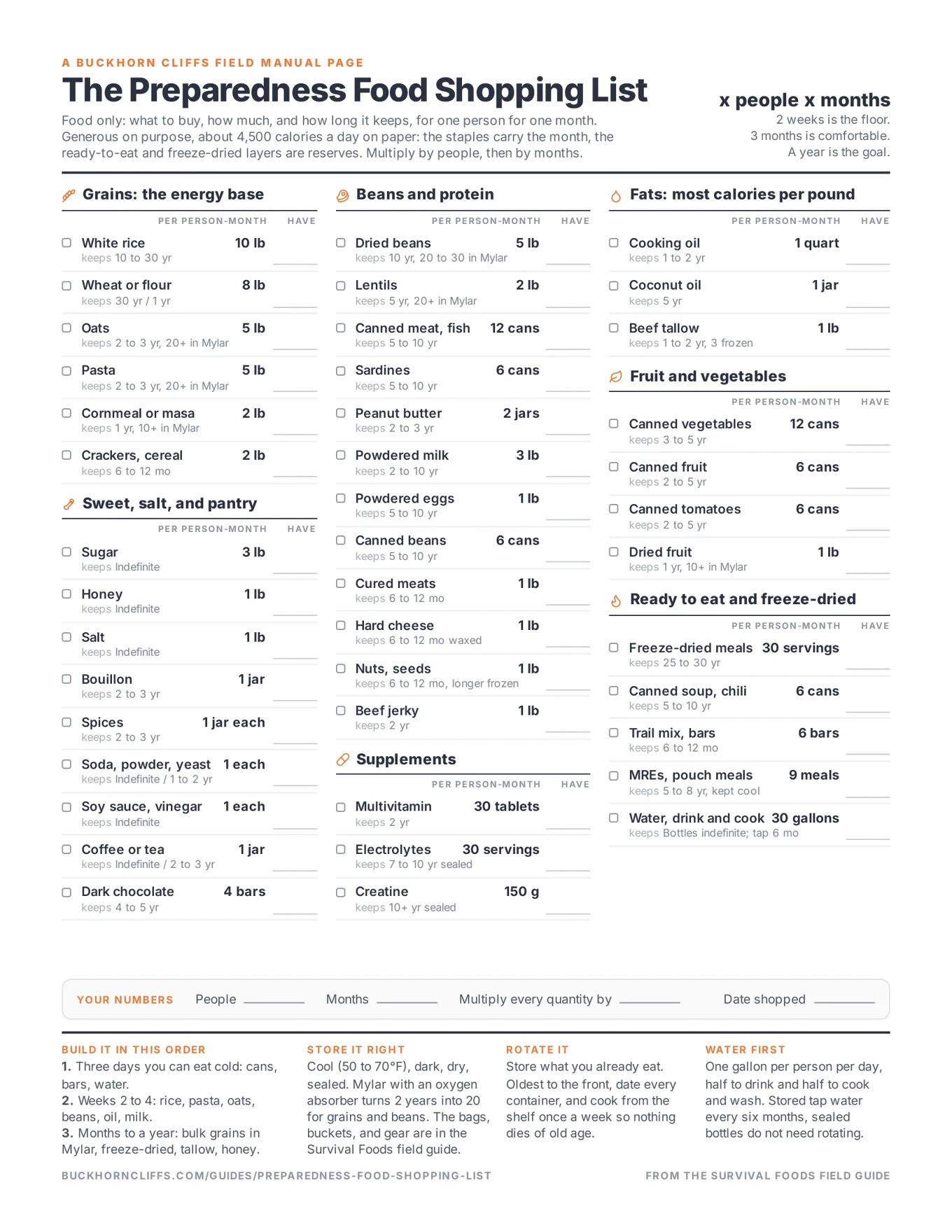
Free download
Get the one-page food shopping list
What to store, how much of it for one person for one month, and how long it keeps. One page with checkboxes, built from the Survival Foods field guide. Print it, multiply by your people and months, and take it to the store.
The PDF comes by email, with my newsletter now and then. Already on the list? You still get it. Read the full page.
How to render it
Buy suet from a butcher, or ask for it: it is often nearly free. Rendering is slow heat and patience.
A pound of suet gives roughly three quarters of a pound of tallow, more from clean kidney fat. The cracklings are food; salt them.
In the kitchen
Outside the kitchen
How to store it, and how long it keeps
Three things spoil fat: air, light and heat. A fourth, meat or water left in the jar, spoils it faster than all three. Clean rendering does more for shelf life than any container.
Airtight glass jars or vacuum bags, out of the light, under about 70°F. A store label usually says a year; clean home-rendered tallow kept cool goes well past it. Pour hot tallow into jars and lid them as they cool, and the lids pull down a light seal.
The longest life you can give it. Freeze in small portions, vacuum sealed or in freezer bags with the air pressed out, so you thaw a cup, not a gallon. It does not freeze solid enough to crack a jar.
Fine for the jar in use. Keep it covered so it does not pick up odors, and use a clean, dry spoon every time. Crumbs and water in the jar start mold.
Signs it has turned
Rancid fat is not poisonous the way spoiled meat is, but it tastes bad and its vitamins and much of its value are gone. Demote a rancid jar to candles, rust coating or fire starter rather than eating it.
Keep it keeping
- Date every jar and lid, and put the oldest at the front.
- Smell a jar when you open it and once more before it goes into food.
- Keep the working jar small and refill it from sealed stock, so the big jars stay sealed.
- Rotate: a pound a month is easy to cook through, and it is the only way tallow at a year old stays a year old.
How much to keep
Working from calories, a pound of tallow a person a month is a sensible floor: it adds about 135 calories a day to a stored diet and covers the fat the rest of the stock lacks. It is on the what to stock list, and the shelf life table has it beside the other fats. Keep most of it frozen and a jar or two on the shelf, and render a fresh batch each fall when suet is cheap.
Prep hard, people.
Questions this answers
Tap a question for the short answer.
How long does beef tallow last?
Rendered and filtered clean, then sealed airtight in a cool, dark place, beef tallow keeps 1 to 2 years. A store label usually says about a year. Frozen in airtight portions it keeps 2 to 3 years. Heat, light, air and leftover meat bits are what shorten it.
How do I store beef tallow long term?
Freeze it in small airtight portions, vacuum sealed if you can, so you thaw only what you need. For the shelf, use airtight jars in a cool, dark cupboard. Render and strain it thoroughly first, since any meat or water left in the fat is what spoils. Date the jars and smell each one before you use it.
What can I use beef tallow for?
In the kitchen: frying and searing, biscuits and pie crust in place of butter or shortening, seasoning cast iron, and binding pemmican. Outside it: hard bar soap, salves and lip balm, leather and boot conditioning, a rust coat on tools, and a smoky emergency candle.
What is pemmican?
Dried lean meat pounded fine and mixed with about an equal weight of melted rendered fat, sometimes with dried berries, then cooled into bars. Fat and dried meat together make a complete trail food that keeps for years when the fat is well rendered and the bars stay cool and dry.
Can I season cast iron with beef tallow?
Yes. Wipe on the thinnest coat you can, wipe it off again, and bake the pan upside down at 450 to 500°F for an hour. Tallow is mostly saturated fat, so it builds a slightly softer layer than flaxseed or canola; a few thin coats and regular cooking harden it.
How many calories are in beef tallow?
Tallow is almost pure fat, so about 9 calories a gram: roughly 250 calories an ounce, 115 a tablespoon, and about 4,100 a pound. That is more than twice the calories per pound of rice, flour or dried beans, which is why fat is the hardest thing to replace in a food stock.
How do I render beef tallow?
Trim and chop or grind cold beef fat, ideally suet from around the kidneys. Heat it low in a heavy pot with a splash of water, stirring now and then, until the fat runs clear and the cracklings turn brown and sink, usually a few hours. Strain through a cloth-lined sieve into clean jars. Do not let it smoke; browned fat spoils faster.
How can I tell if tallow has gone rancid?
Smell it. Fresh tallow smells faintly beefy or of nothing much. Rancid tallow smells sour, metallic, or like crayons and old putty, and it may turn sticky, yellow or darker. Rancid fat is not poisonous in the way spoiled meat is, but it tastes bad and has lost most of its value, so use it for candles or rust coating instead of food.
Keep going
Related to this
Membership · $49.95 per year
There is a lot more behind the lock
Every recipe and resource from the Prepper's Chemical Survival Guide, all six field guides to read here and download, the full audit and logbook, all twelve reference charts, and no ads.
My Manual · included
Build your own field manual
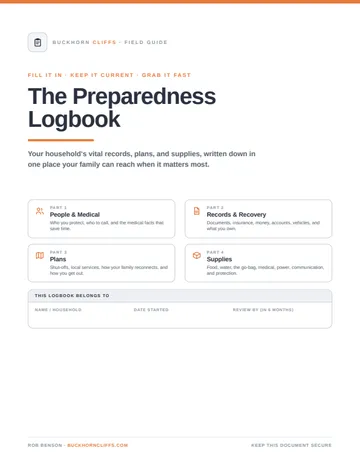
The most useful thing a membership gives you. Save any page on this site, recipes, charts, and whole field guides included. Arrange them in the order you want, name it, and print one manual with a cover and contents, or keep it as a PDF that opens with no signal.
- It works when this site does not
- Only your pages
- Anyone in the house can use it
- One current copy, not a pile of printouts
- The house binder
- A copy for the bug-out bag or truck
- A copy for family
- An offline PDF



Stay Ready
New entries, updates, and useful instruction.
Stay one step ahead on your preparedness journey.