BUCKHORN CLIFFSA preparedness field manual

Food · Supply

MREs (Meals, Ready-to-Eat): Contents, Heating, Shelf Life

What comes in an MRE, how the flameless ration heater works, calories per meal, and shelf life by storage temperature.

Quick facts

  • CaloriesAbout 1,200 to 1,300 per meal
  • Shelf life, typical3 years at 80°F official; about 7 at 60°F
  • At 60 to 70°FAbout 7 years at 60°F, 4.5 at 70°F (USDA FSIS); the older Natick chart ran 11 and 8
  • At 90°FAbout 2.5 years
  • At 100°FAbout 1.5 years
  • Heating timeAbout 10 to 15 minutes in the flameless ration heater

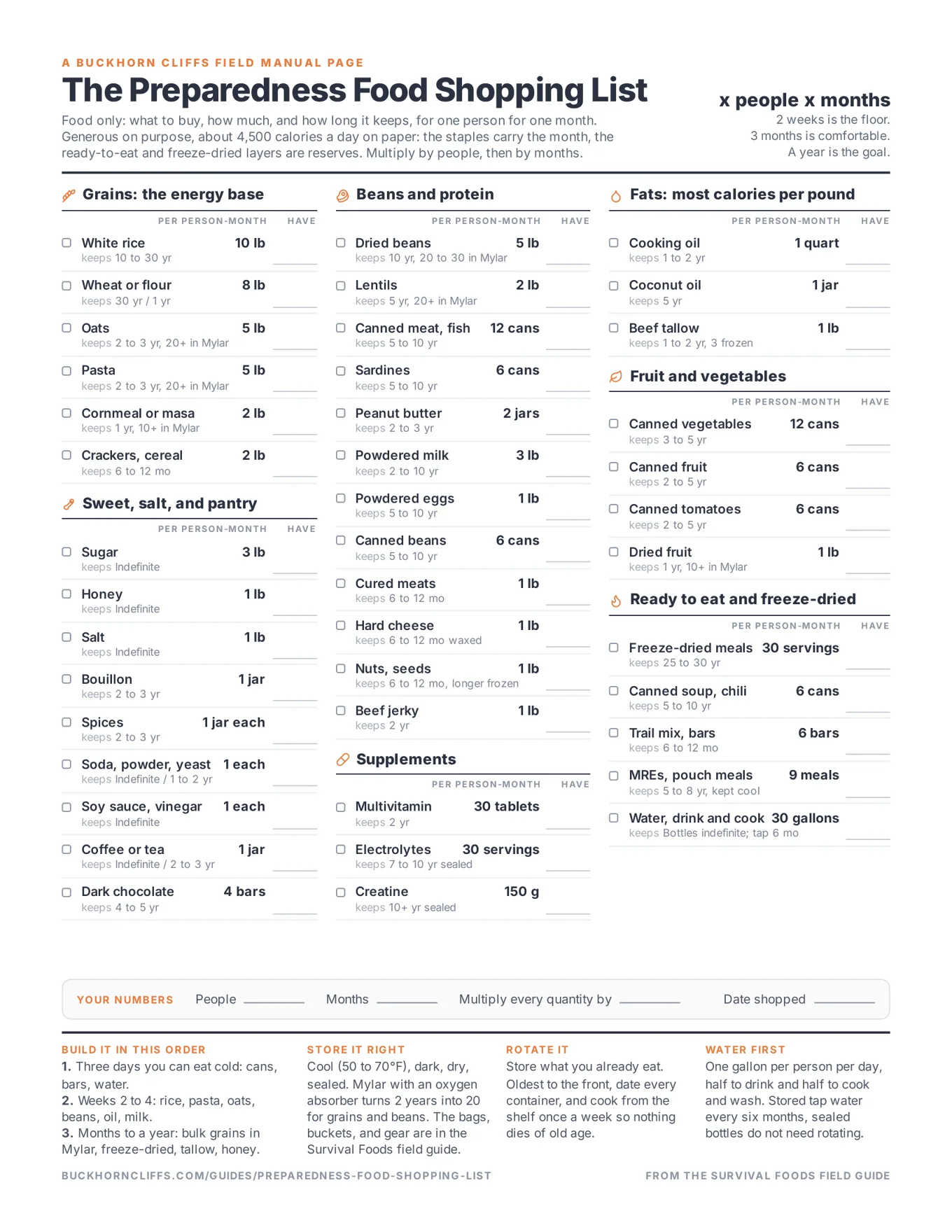
Where this sits on the food shopping list
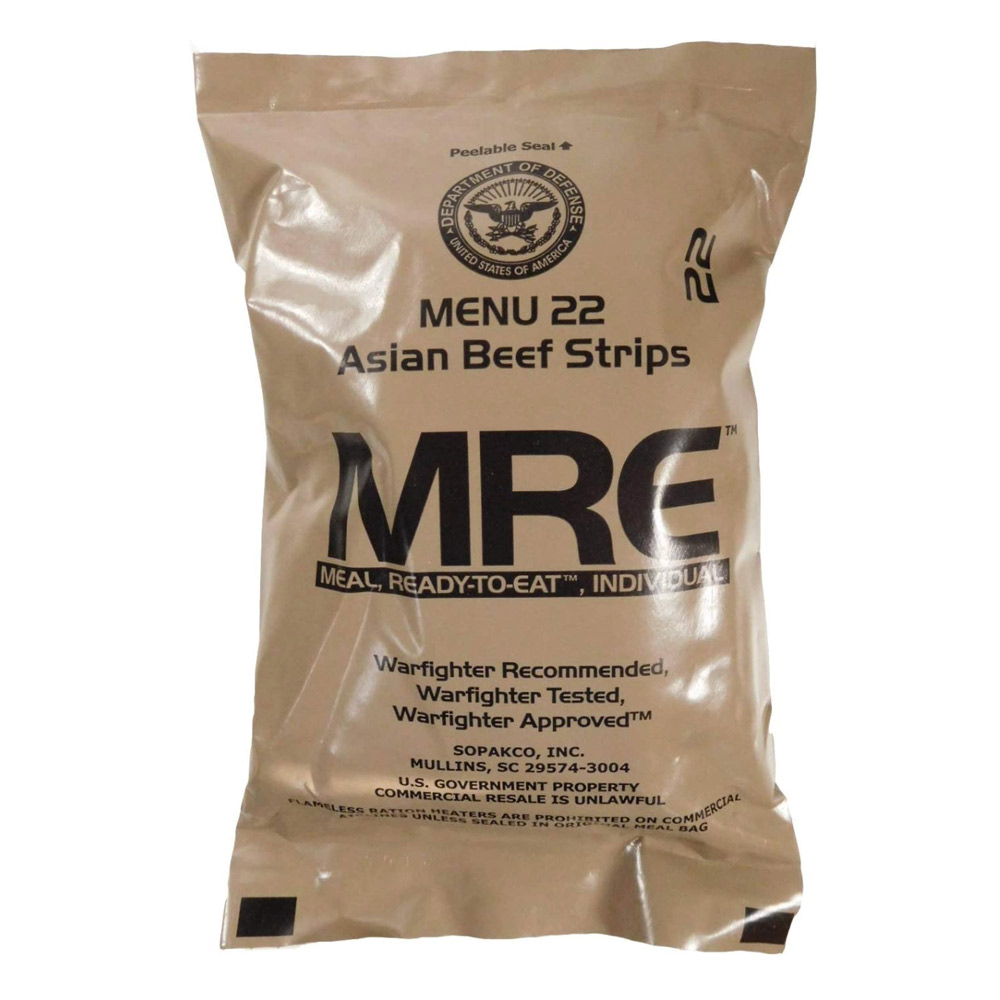
Meals, Ready-to-Eat (MREs)

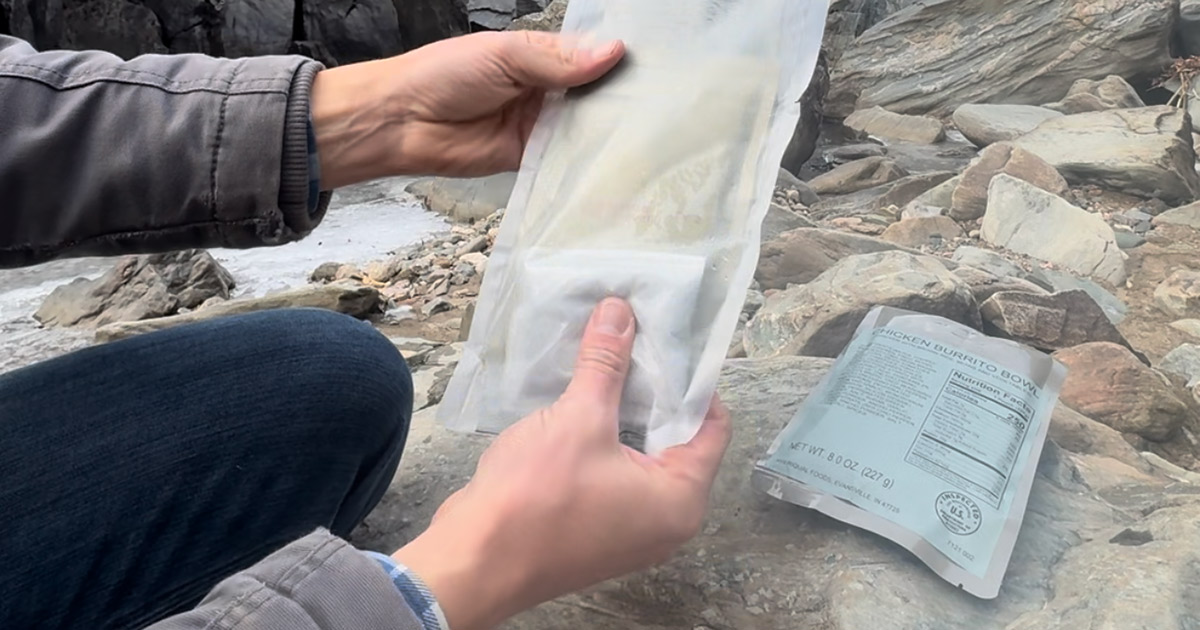
are self-contained, individual field rations in lightweight packaging used by the military and great for emergency scenarios. They are designed to be easily transportable and provide a balanced diet for soldiers in the field. MREs are durable and hold up in harsh conditions.
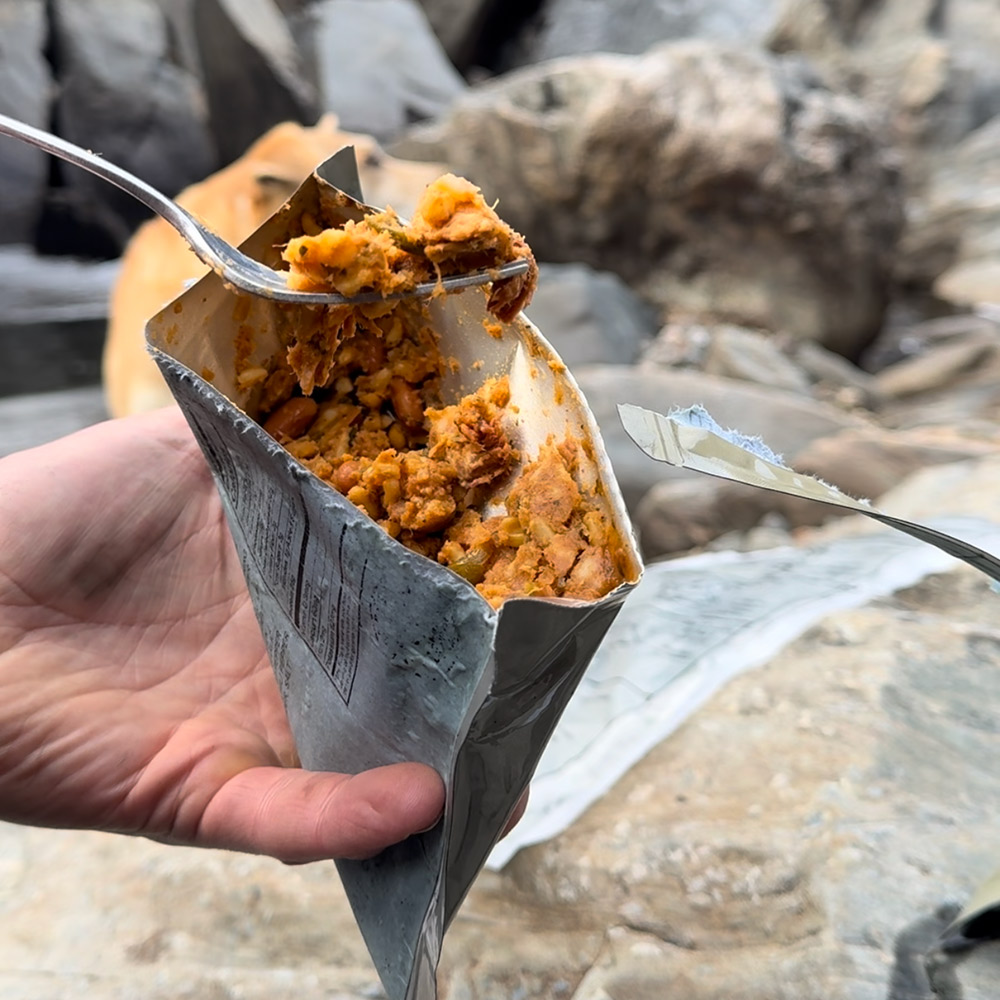

MRE Main Course
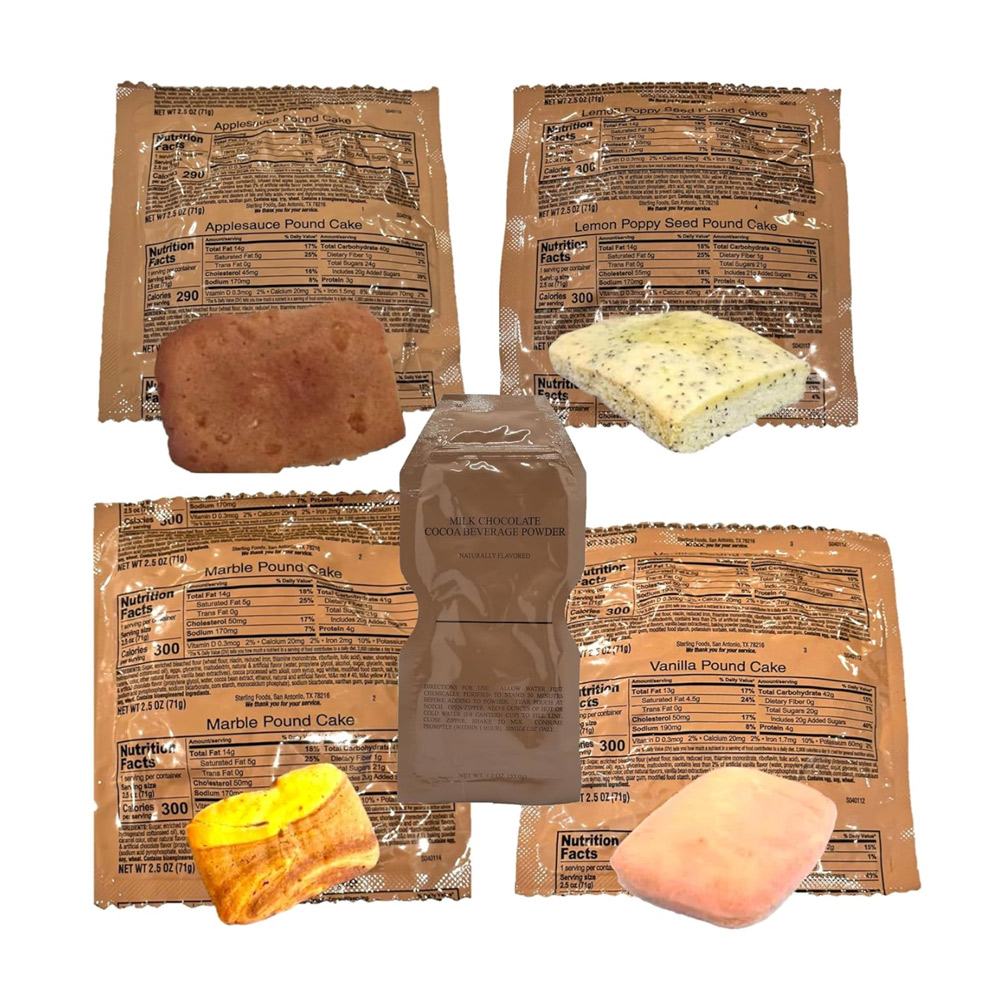
Treat MRE

What's Typically Found in MREs

1Main CourseThis is typically a protein-rich dish like beef stew, chicken, pasta, or vegetarian options.
2Side DishOften includes rice, corn, fruit, or mashed potatoes.
3Bread or CrackerUsually accompanied by a spread like peanut butter, jelly, or cheese spread.
4DessertCommonly a cookie, brownie, or other sweet items.
5SnacksNuts, dried fruits, or snack bars.
6BeveragesPowdered drink mixes that can be added to water, including coffee, tea, or sports drinks.
7Condiments and AccessoriesSalt, pepper, sugar, creamer, and sometimes hot sauce. Utensils and napkins are also included.
8Flameless Ration Heater (FRH)A key component for heating the meal.
MRE Pack
MRE Cakes

SEARCH MREs on AMAZON

Heating Up MREs

MREs can be eaten cold if necessary, but they usually come with a Flameless Ration Heater (FRH) for heating:
1Activation of FRHThe FRH is a bag that contains a magnesium-based, water-activated chemical heater. To activate it, a small amount of water is added to the bag, which then chemically reacts with the magnesium, producing heat.
2Heating the FoodThe main meal pouch is placed into the FRH bag. The chemical reaction generates enough heat to warm the meal thoroughly in about 10 to 15 minutes.
3Safety PrecautionsThe heater gives off hydrogen gas as it works, so use it in a ventilated space and away from flames, sparks and smoking. The bag and the water get hot enough to scald. Do not drink the heater water.
The Preparedness Food Shopping List (PDF), a one page printable PDF

Free download

Get the one-page food shopping list

What to store, how much of it for one person for one month, and how long it keeps. One page with checkboxes, built from the Survival Foods field guide. Print it, multiply by your people and months, and take it to the store.

The PDF comes by email, with my newsletter now and then. Already on the list? You still get it. Read the full page.

Nutritional Content and Shelf Life

CaloriesMREs are calorie-dense, typically containing about 1,200 to 1,300 calories per meal to meet the high energy demands of active military personnel.
NutritionThey are designed to provide a balanced marcronutrient profile with carbohydrates, protein, fat, vitamins, and minerals.
Shelf LifeMREs have a long shelf life, 3 years at 80°F by the official rating, and up to about 7 years kept at 60°F; heat is what shortens it.

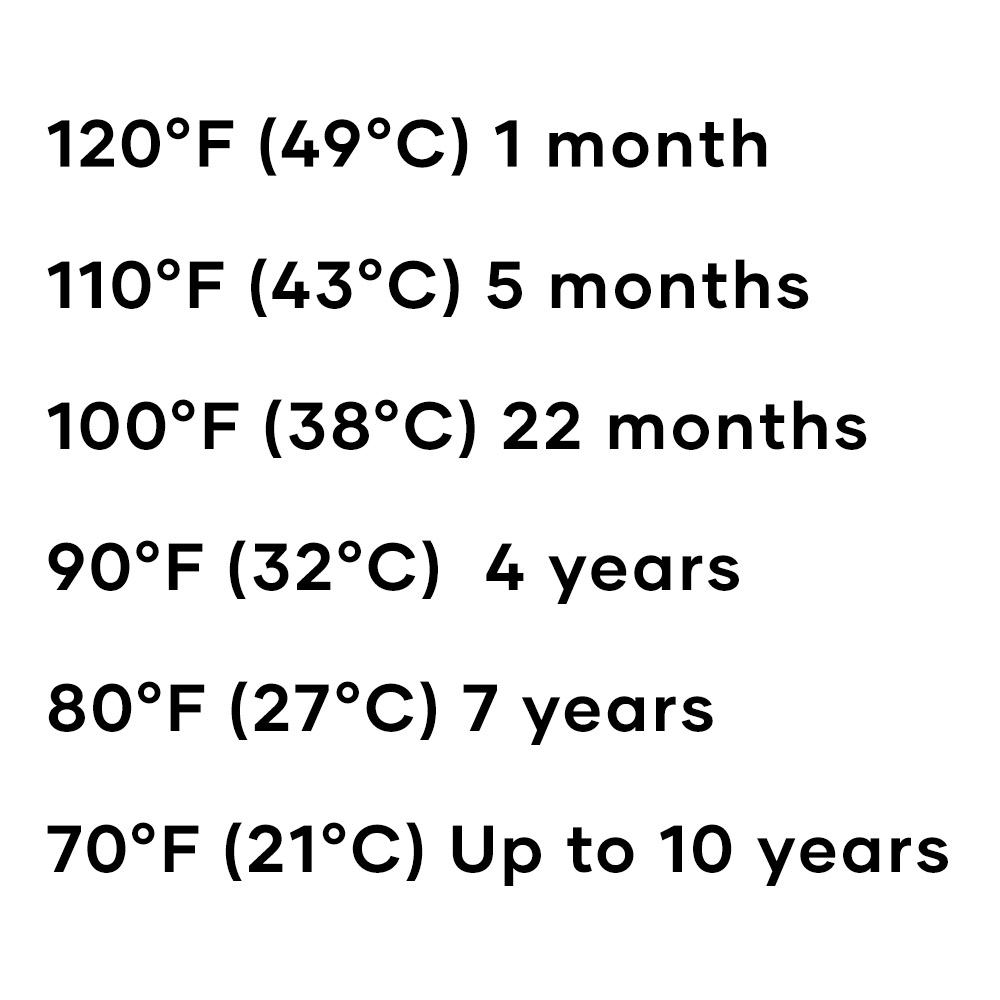
MRE Shelf Life by Storage Temperature

Shelf Life of MREs
  1. 120°F (49°C):
    • Lifespan: Approximately 1 month.
    • Context: Such high temperatures can rapidly degrade the quality of MREs, affecting taste, texture, and nutritional content.
  2. 110°F (43°C):
    • Lifespan: About 5 months.
    • Context: Still quite warm, this temperature significantly shortens the MRE's lifespan.
  3. 100°F (38°C):
    • Lifespan: About 1.5 years (18 months) on the USDA FSIS chart; the older Natick chart said 22 months.
    • Context: This is closer to conditions in hot climates or non-climate-controlled storage areas.
  4. 90°F (32°C):
    • Lifespan: About 2.5 years on the USDA FSIS chart; the older Natick chart said 55 months.
    • Context: This is a common maximum storage temperature recommended for maintaining reasonable shelf life.
  5. 80°F (27°C):
    • Lifespan: 3 years is the official rating, and the USDA FSIS chart agrees. The older Natick chart projected about 6 years.
    • Context: This is the reference temperature the military uses for its 3 year rating. Cooler is better.
  6. 70°F (21°C):
    • Lifespan: About 4.5 years at 70°F and 7 years at 60°F on the USDA FSIS chart. The older Natick chart ran longer: 8 years at 70°F and close to 11 at 60°F.
    • Context: These are optimal conditions that can significantly extend the shelf life of MREs, though such controlled conditions may not always be practical.
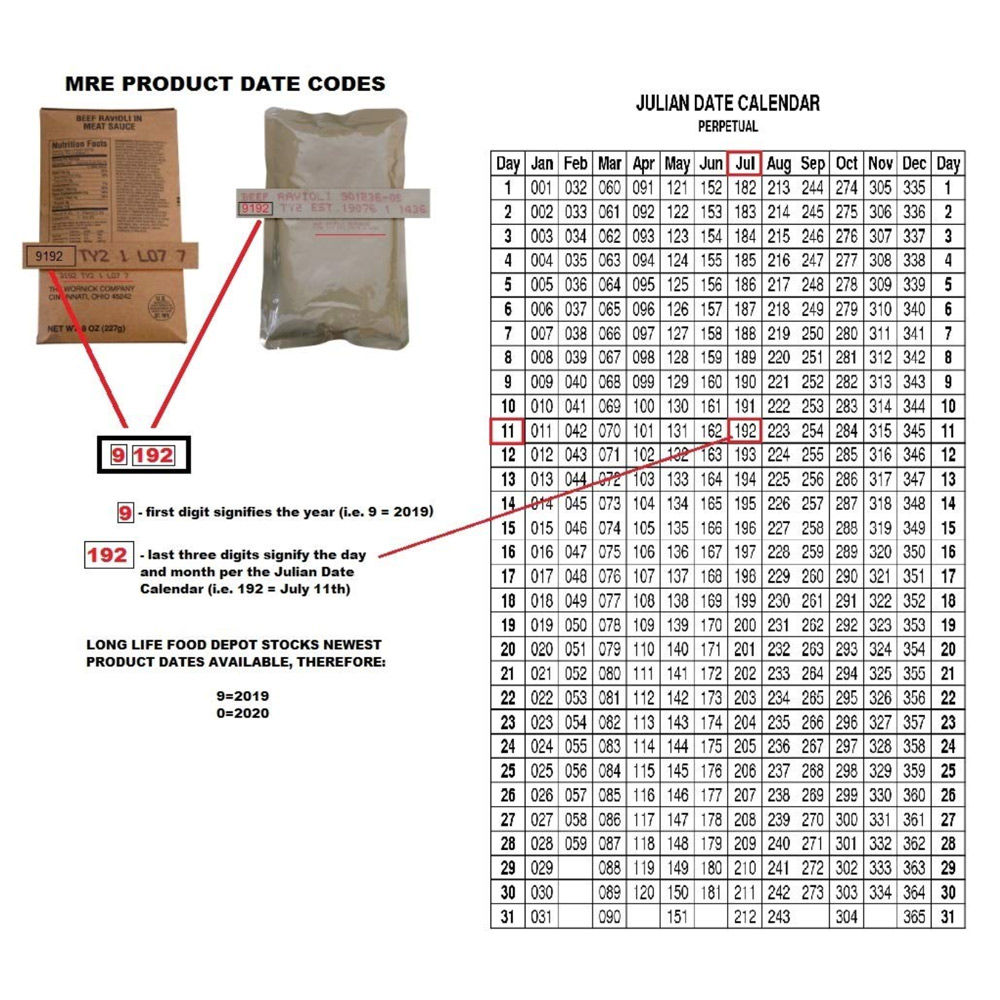
MRE Date Codes

Additional Considerations

Quality vs. SafetyWhile the taste and nutritional value of MREs may decline over time, they can remain safe to eat beyond these periods if the packaging is intact and they have been stored properly.
Visual InspectionBefore consuming an MRE that has been stored for a long period, it's wise to inspect the packaging for any signs of damage or spoilage.
Manufacturer GuidelinesAlways refer to the manufacturer's guidelines for the most accurate shelf life information, as formulations and packaging technology can vary.

Variations and Customizations

  • Special Diets: There are vegetarian, kosher, and halal options to cater to different dietary requirements.
  • International Variants: Many countries have their own versions of MREs, tailored to their military's dietary preferences and nutritional guidelines.

Questions this answers

Tap a question for the short answer.

How long do mres last?

The official rating is 3 years at 80°F. Kept cooler they last longer: about 4.5 years at 70°F and 7 years at 60°F on the USDA FSIS chart. Heat shortens that fast: about 1.5 years at 100°F and a month at 120°F.

How does storage temperature affect mre shelf life?

Heat shortens shelf life sharply. On the USDA FSIS chart expect about 1 month at 120°F, 1.5 years at 100°F, 2.5 years at 90°F, 3 years at 80°F (the official rating), 4.5 years at 70°F and 7 years at 60°F. The older Natick chart ran longer at every temperature.

How do I heat an mre?

Use the flameless ration heater that comes with the meal. Add a small amount of water to the bag to activate the magnesium-based heater, put the main meal pouch inside, and wait about 10 to 15 minutes. Do it in a well-ventilated area and handle it carefully, since it gets quite hot.

How many calories are in an mre?

An MRE typically contains about 1,200 to 1,300 calories per meal, built to meet the high energy demands of active military personnel, with a balance of carbohydrates, protein, fat, vitamins, and minerals.

What comes in an mre?

A typical MRE has a main course, a side dish, bread or crackers with a spread, a dessert, snacks, a powdered drink mix, condiments, utensils and napkins, and a flameless ration heater for warming the meal.

Can I eat an expired mre?

Taste and nutritional value decline over time, but MREs can remain safe to eat beyond their rated periods if the packaging is intact and they were stored properly. Inspect the packaging for damage or spoilage before eating one that has been stored a long time.

Keep going

Read nextThe Bug-Out Bag: What Goes in It, How to Build One, and the Packs I CarryOne bag per person, ready by the door, built to carry a family away from the house for three days. What is in a bug-out bag by the job each item does, how to build one in an afternoon, how heavy it should be, the three packs I use and why, and every item I carry.Kits and Planning · Guide

Related to this

Membership · $49.95 per year

Everything on this site, open, printable, and yours on paper

When the grid goes down, this site goes with it. Paper does not. Membership opens every member page and every recipe from the book, hands over all thirteen field guides as PDFs, and builds a binder from the pages your household uses.

  • 158member pagesopen in full, every amount and every step
  • 138recipeswith exact amounts, from the book and beyond it
  • 13field guides304 pages of PDFs, $130 bought one at a time
  • 1manual of your ownbuilt from any page here, printed with your cover
  • Every member page in full. the exact amounts, every step, every parts list
  • Every recipe and resource from the book. all 138 from the Prepper's Chemical Survival Guide, searchable here
  • All 13 field guides. read them here or download the PDFs, 304 pages
  • My Manual. save any page, recipe or whole guide, order it, print one binder with your own cover
  • The audit and the logbook, saved. your scores and checklists on every device
  • Print and Save as PDF on every page. and no ads

Join for $49.95 per year

  • One payment, $49.95 per year. Cancel any time and keep access to the end of the year you paid for.
  • Sign in by email. No password, and the sign-in renews itself on every visit.
  • Most of the site stays free. Membership is for the depth, the PDFs and the paper.
Food · SupplyLast reviewed 2023-12-31

Membership

Save to My Manual is a member tool

Members build their own manual from the pages that fit their household, then print it or keep it as a PDF.

Why it matters

When the grid goes down, this site goes with it. Paper does not. Membership is how you get the whole manual off the screen and onto the shelf: every page in full, every field guide, and a binder built for your own household.

The field guide library

All thirteen field guides. 304 pages. Included.

The complete Buckhorn Cliffs PDF set, yours to download, print, and keep from the day you join.

$130if bought one at a time

  • Cover of Stockpile Essentials Field GuideStockpile Essentials39 pagesEverything to keep on hand, category by category, plus the 20 multi-use items.
  • Cover of Survival Foods Field GuideSurvival Foods35 pagesStoring, extending, and using the food supply. Real shelf life by the numbers.
  • Cover of Chemical Compounds Field GuideChemical Compounds29 pagesThe 33 compounds: storage, top uses, hazards, and the never-mix chart.
  • Cover of Spare Parts and Repair Stock Field GuideSpare Parts and Repair Stock40 pagesWhat to keep on hand to fix the home and land when the supply chain breaks.
  • Cover of Walk-Around Preparedness AuditWalk-Around Preparedness Audit33 pagesFifteen systems scored 1 to 5, with the printable scorecard.
  • Cover of The Preparedness LogbookPreparedness Logbook30 pagesThe household information that needs to be on paper.
  • Cover of Off-Grid Portable Solar Power Field GuideOff-Grid Portable Solar Power16 pagesSize a power station and a folding panel, pair them, wire them, keep them alive.
  • Cover of Home Backup Power System Field GuideHome Backup Power System20 pagesA battery and a hybrid inverter wired into the house: hybrid against off-grid, the wiring, the mistake to skip.
  • Cover of The Four KnotsFour Knots6 pagesWhich knot for the job, and how to tie each one in four moves.
  • Cover of The Bug-Out Bag Field GuideBug-Out Bag18 pagesOne bag per person for three days: the twelve jobs, the afternoon build, the packing plan, every item by job, and the checklist.
  • Cover of Home Security and Defense Field GuideHome Security and Defense12 pagesThe four layers from the property edge to the people inside, what to build first, the night something feels wrong, and the plan with or without a weapon.
  • Cover of Home Canning Field GuideHome Canning13 pagesWater bath or pressure canner, the tested times by altitude, the pressure for your elevation, hot pack against raw pack, dry canning, and the safe-jar checklist.
  • Cover of Oxygen Absorbers and Desiccants Field GuideOxygen Absorbers and Desiccants13 pagesWhich packet every food and supply needs, the absorber and silica gel sizing charts, every storage container rated, and how to keep the packets alive.

My Manual · included

Build your own field manual

The most useful thing a membership gives you. No book fits your household exactly. My Manual does. Save any page on this site, recipes, charts, and whole field guides included, arrange them in the order you want, and print one manual with your name on the cover. It holds only what is relevant to you, and nothing you would skip.

Why it matters

  • It works when this site does notNo power and no signal means no website. A printed manual and an offline PDF still open, and that is why any of this is written down.
  • Only your pagesThis site covers every household. Yours needs a fraction of it. Your manual holds the pages that match your water source, your climate, and your gear, so nobody digs through the rest under stress.
  • Anyone in the house can use itThe person who reads this site may not be the one home when it counts. A binder on the shelf, in the order you chose, is something a spouse or a teenager can follow.
  • One current copy, not a pile of printoutsEvery page prints in the same field guide layout with a cover and the print date. Change a page, print again, and the old copy is easy to spot.

What to build with it

  • The house binderYour water source, your climate, your gear. Only the pages you would reach for.
  • A copy for the bug-out bag or truckA short version that travels: water, first aid, comms, and the recipes you rely on.
  • A copy for familyHand a parent or a grown kid a manual built for their house and their supplies.
  • The shop and the barnParts lists, repair skills, and the never-mix chart, kept where the work happens.
  • A recipe book of your ownThe cleaners, fuels, and remedies you make, with exact amounts, in one place.
  • An offline PDFSaved to a phone, a tablet, or a drive in the Faraday bag. It opens with no signal.

How it works

  1. 1Save what fitsPress "Save to My Manual" on any page: a recipe, a chart, a guide, a parts list, or a whole field guide.
  2. 2Arrange it your wayOn My Account, drag the pages into the order you want. Name the manual and add your household name.
  3. 3Print it or save a PDFOne button makes a real PDF file, laid out for 8.5 x 11 inch paper with a cover. Print it from any device or keep the file. Field guides go in exactly as the PDFs are laid out. No ads, no photos.
  4. 4Keep it currentAdd a page, pull one out, print again. The cover carries the date, so you always know which copy is the latest.

Also included

  • The entire site, unlockedAll 158 member pages open in full: exact amounts, every step, every warning, every parts list. Nothing held back.
  • Every recipe and resource in the bookAll 138 recipes and 33 compounds from Prepper's Chemical Survival Guide, with exact amounts, every step, every warning, and the reference charts.
  • A clean PDF of any entryOne press turns any page into a field guide sheet for the binder, the truck, or the shop wall.
  • Checklists and audit scores that follow youSaved to the account, so the phone, the laptop, and the shop computer always match.
  • No adsMembers read the whole site without a single ad.
$49.95per year. About 14 cents a day. Cancel any time and keep the year you paid for.