Quick facts
- Day one
- Bottled water
- a way to treat more
- dry clothes
- a light
- a charged phone
- WaterOne gallon per person per day; floodwater itself is never treatable. Boil or chlorinate the cleanest source you can reach
- MedicalRegular prescriptions, an antibiotic supply for infected cuts, a real first aid kit, tetanus up to date
- CleanupN95 respirator, goggles, nitrile and leather gloves, waterproof boots; a dust mask does nothing against mold
- Power and heatGenerator and fuel outside 20 feet from the house; indoor-rated heater only, with a CO alarm
- DonateCash, new socks and underwear, cleaning supplies, diapers, water. Not used clothing
A flood is not one emergency. It is three in a row: the water, then the days without power, water or dry ground, then the weeks of cleanup where infection, mold and exhaustion do more harm than the water did. The supplies below are in that order, the order a family actually needs them, whether you are stocking your own house on a river or filling a truck for a town that just went under. The flood scenario page is the hour-by-hour; this is the gear.
First: water
Floodwater is sewage, fuel, pesticide and drowned animals in solution. No filter, tablet or boil makes it drinkable, so the plan is never to treat the flood; it is to have water stored and to be able to treat the cleanest source you can reach once the bottles run low.
Bottled water
Day one through threeCases of it, a gallon per person per day. It is the first thing every shelter runs out of and the easiest thing to hand someone. Stored in the dark it keeps for years.
A way to make more: calcium hypochlorite, bleach, a filter, a pot
Day three onwardBoil the cleanest water you can find one minute, or chlorinate it: 8 drops of plain bleach per gallon and 30 minutes. A pound of calcium hypochlorite makes thousands of gallons of stock solution and, unlike bleach, keeps for a decade dry. A gravity filter takes the silt and parasites out first; after a flood, filter and then disinfect, because the sewage load carries viruses a filter misses. The clean water guide is the full table.
Then: dry, warm, fed, lit
Dry clothes, socks, underwear, blankets, sleeping bags
The first nightWet and cold is how people get sick and hurt in the first days. Wool or synthetic layers, several pairs of socks per person, and a sleeping bag each. Shelters run out of new socks and underwear before anything else; buy them in packages if you are donating. The warmth guide is how to make one dry room warm with almost nothing.
Food that needs no cooking
A week's worthCanned meat, fish and beans with a manual opener, peanut butter, crackers, granola bars, dried fruit, jerky, shelf-stable milk, and the ready-to-eat meals from the food shopping list. Nothing that needs a working kitchen, a fridge or clean water to prepare.
Lights, batteries, phone charging
Every nightA headlamp per person, a lantern for the room, spare batteries, and a power bank with a solar panel for the phone; a charged phone is the flood victim's most important tool. Texts get through when calls do not.
Camp stove and fuel
Hot food and boiled water, outdoorsA propane camp stove boils water for treatment and makes a hot meal, which matters more for morale than it sounds. It runs outdoors only, never in a house, tent or shelter. The propane guide covers the stoves and the cylinders.
Free download
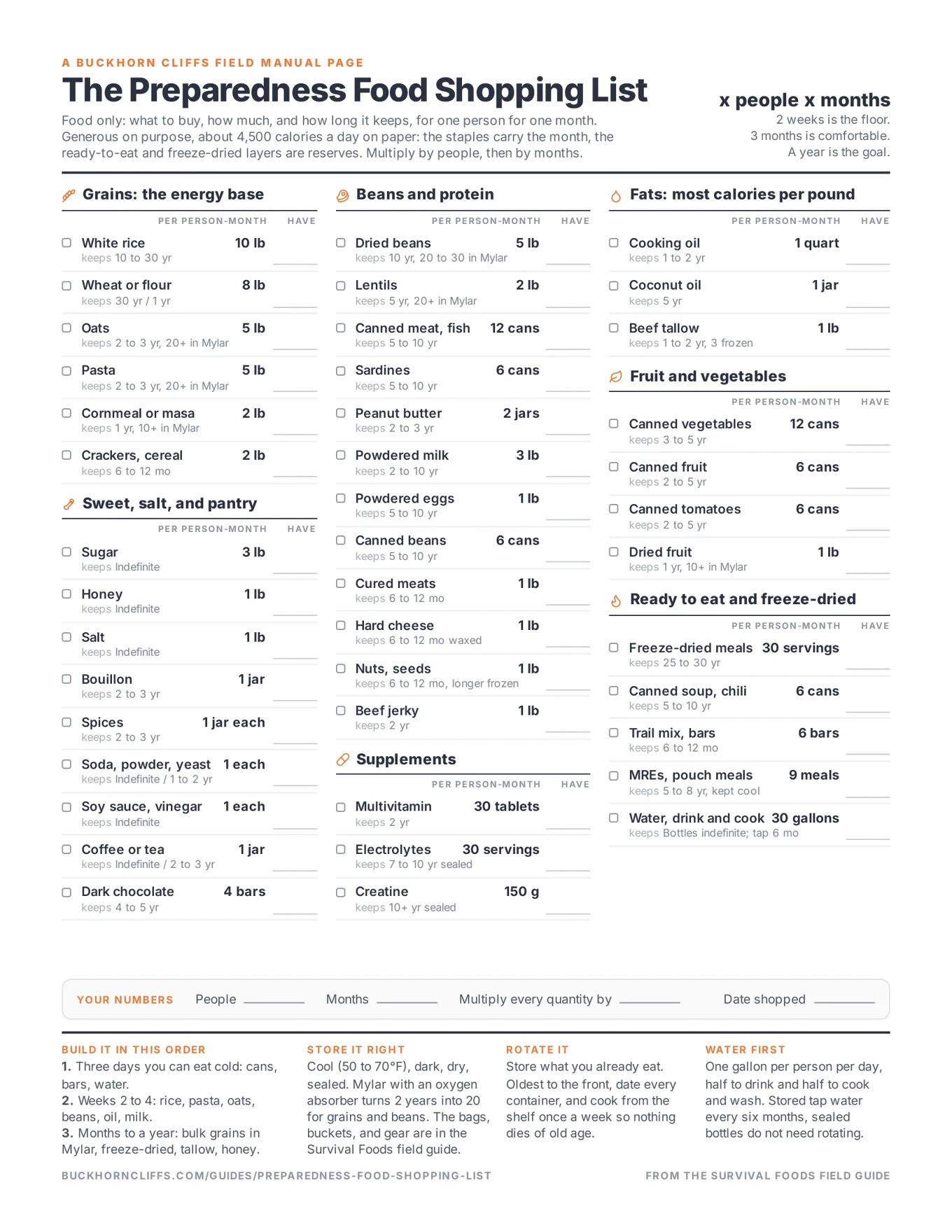
Get the one-page food shopping list
What to store, how much of it for one person for one month, and how long it keeps. One page with checkboxes, built from the Survival Foods field guide. Print it, multiply by your people and months, and take it to the store.
The PDF comes by email, with my newsletter now and then. Already on the list? You still get it. Read the full page.
Medical
Regular prescriptions and an antibiotic supply
Before the flood, not afterPharmacies flood too. A month of every daily medication in a waterproof bag in the go-kit, and an emergency antibiotic supply for the infected cuts that follow floodwater everywhere. The prescription medication guide is how to get both ahead of time.
A real first aid kit
Cuts, punctures, blisters, rashesFloods are full of nails, glass and sheet metal under brown water. Wound wash, iodine, a lot of bandages and tape, blister care, antifungal cream for feet that stay wet, and a tetanus shot inside ten years. The medical preparedness guide is the kit list; the deep cut page is what to do with the one you will get.
Floodwater infects small wounds fast. Any break in the skin that touched it gets soap and clean water immediately, then iodine or wound wash, then a dry dressing, and gets looked at twice a day for redness, heat and swelling. That is when the antibiotic supply matters.
Power and heat
Generator, fuel cans, heavy extension cords
Fridge, pumps, fans, toolsA generator runs the refrigerator, a sump or utility pump, the fans that dry the house and the tools that gut it. It runs outside, at least 20 feet from any building with the exhaust pointed away, with a battery CO alarm inside; carbon monoxide kills more people after floods than the water does. Fuel in proper cans, stored outside, rotated. Cords rated for the load, run so they are not lying in water.
An indoor-rated heater
Cold nights in a wet houseOnly a heater built for indoor use, a window cracked, a CO alarm in the room, and off before sleep. Torpedo heaters, tank-top heaters and camp stoves stay outside no matter how cold it gets. The power outage gear list has the models.
Cleanup: the part that hurts people
The water leaves in days. The mold, the sewage dust and the exhaustion last for weeks, and that is when most of the injuries and illness happen. Everything porous that stayed wet more than 48 hours comes out: carpet and pad, drywall to a foot above the water line, insulation, mattresses, upholstered furniture. Photograph first for insurance.
N95 respirator, goggles, gloves
Every hour inside a wet houseMold spores and dried sewage dust are what put cleanup crews in the hospital. An N95 is the minimum and a half-mask respirator with P100 cartridges is better for days of it; a paper dust mask does nothing. Goggles, nitrile gloves under leather work gloves, and long sleeves. For the worst of it, a full kit with a proper mask.
Waterproof boots
Standing water and what is under itRubber boots to the knee for the water, steel-toe work boots for the demolition. Floodwater hides nails, glass and open drains, and wet feet for a week grow their own infections. Dry socks every night.
Shovels, pry bar, utility knife, saws, chainsaw
Mud out, tear out, clear outSquare shovels for mud, a flat bar and a utility knife for drywall and carpet, a hand saw and a chainsaw for the trees and the framing, a sledge, and contractor bags by the case. A chainsaw after a flood is a tool for people who already run one; a leg cut is a common flood injury.
Tarps, plastic sheeting, rope
Roofs, windows, and a dry cornerA tarp over a damaged roof section, plastic over broken windows, and a dry corner for the family's things. The knots guide is how to tie them so they stay.
Bleach, buckets, brushes, contractor bags
Every hard surfaceHard surfaces get scrubbed with detergent and water, then a cup of bleach per gallon of water, and left to dry with the fans running. Never mix bleach with ammonia or any other cleaner; the never-mix checker is for exactly this week. The mold cleaner formula is for what comes back.
Communication
GMRS radios and a weather radio
When the towers are down or jammedCell service goes with the power or gets jammed by everyone calling at once. GMRS handhelds reach across a neighborhood and, with a repeater, across a valley; one license covers the family for ten years with no test. A hand-crank AM/FM and weather radio brings the official word in. The no-cell communication guide is the radios and the plan.
Text before calling. A text squeezes through a jammed network when a call will not, and it uses almost no battery.
Hygiene and the small stuff
Body wipes, hand sanitizer, soap, a bucket toilet
No running water for daysHands get washed or sanitized after every contact with floodwater, debris and shared surfaces; that is how the stomach bugs spread through a shelter. Body wipes for the days with no shower, and a bucket toilet with bags and lime when the sewer is out, from the hygiene and sanitation guide.
Insect repellent
The mosquito bloom that follows the waterStanding water everywhere means mosquitoes in a week or two. DEET or picaridin repellent, and screens or netting where people sleep.
Documents, cash, keys
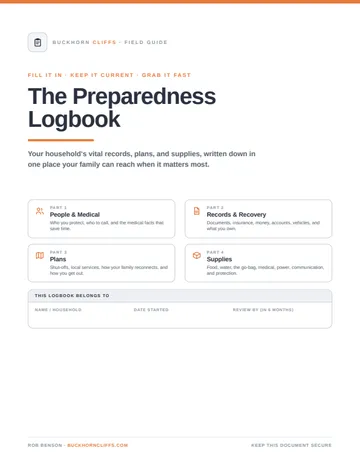
In a waterproof bag before the water comesInsurance policy, deed or lease, IDs, a list of medications, the phone numbers that are only in the phone, and enough cash for a week when cards do not work. The preparedness logbook is the binder that has all of it in one place.
If you are donating
- Cash to a local church, fire department or relief group that is already on the ground. They buy exactly what is short that day.
- Bottled water, by the case.
- New socks, underwear and work gloves in packages. Diapers, wipes, formula, feminine supplies.
- Cleaning supplies: bleach, contractor bags, mops, buckets, sponges, N95 masks.
- Food that needs no cooking, and manual can openers.
- Phone chargers and power banks.
Skip used clothing, which buries every disaster in sorting, and anything that needs a working kitchen. Call ahead; the needs change daily and a truck of the wrong thing is a problem for people who already have enough of them.
Questions this answers
Tap a question for the short answer.
What supplies do flood victims need most?
In order: safe drinking water and a way to make more; dry clothes, socks and blankets; a light and a charged phone; food that needs no cooking; their prescriptions and a first aid kit; then, once the water drops, the cleanup gear: respirators, gloves, boots, shovels, bleach, contractor bags and fuel for the generator. Shelters run short of new socks and underwear, diapers, wipes and feminine supplies before anything else.
What should I donate after a flood?
Cash to a local organization does the most, because they buy exactly what is short that day. For goods: bottled water, new socks and underwear in packages, diapers and wipes, feminine supplies, cleaning supplies (bleach, contractor bags, mops, buckets, sponges), N95 masks and work gloves, non-perishable food that needs no cooking, and phone chargers. What not to send: used clothing, which drowns every disaster in sorting labor, perishable food, and anything that needs a working kitchen.
How do I get clean drinking water after a flood?
Bottled water first. After that, the cleanest source you can reach that is not floodwater: a tap under a boil notice, a neighbor's well that stayed above the flood, a rain barrel, a stream upstream of the damage. Boil it one minute (three above 6,500 feet) or add 8 drops of plain bleach per gallon and wait 30 minutes. A filter alone is not enough after a flood because of the sewage load and the viruses, so filter then boil or chlorinate. Floodwater itself carries fuel, sewage and chemicals that no boiling or filter removes.
What gear do I need for flood cleanup?
An N95 or better respirator, because mold spores and dried sewage dust are the real hazard; goggles; nitrile gloves under leather work gloves; rubber boots; a tetanus shot within the last ten years. Then shovels, a pry bar and a utility knife to pull wet drywall and carpet, contractor bags, bleach or a mold cleaner, buckets and a stiff brush, fans, and a generator to run them. Everything porous that stayed wet more than 48 hours comes out: carpet, pad, drywall to a foot above the water line, insulation, mattresses.
How do I communicate after a flood when cell service is down?
Text before you call; texts get through on a jammed network when calls do not. Keep the phone charged from a power bank or the vehicle. For talking to family and neighbors with no network at all, GMRS radios: a few miles across open ground, more with a repeater, one license covers the family for ten years with no test. A hand-crank or battery AM/FM and weather radio brings the official word in. The communication guide has the radios and the plan.
Can I use pool shock to purify water after a flood?
Yes, for germs. Calcium hypochlorite stored as a dry powder makes a stock chlorine solution that treats thousands of gallons, which is why a one-pound bag is in my water kit instead of a jug of bleach that loses strength in a year. Follow the calcium hypochlorite formula on this site for the measurements. It kills bacteria and viruses; it does not remove fuel, chemicals or sewage solids, so the source still has to be the cleanest water you can find, never the flood itself.
Is it safe to walk through floodwater?
Only when there is no other way, and never by choice. Six inches of moving water knocks an adult down and two feet floats a truck. Standing water hides open manholes, downed power lines that can electrify the whole street, sharp debris, and a load of sewage and chemicals that infect every scratch. If you must, waterproof boots, a walking stick to probe, gloves, and wash every part of you that touched it with soap as soon as you are out.
When can I go back into a flooded house?
After the water is gone from the structure, the power has been confirmed off at the meter by the utility or an electrician, and you have checked from outside for shifted foundation, sagging roof, gas smell and downed lines. Go in daylight with a flashlight, not a flame; open windows; N95, gloves and boots on. Photograph everything before you touch it for insurance. Then start pulling wet material, because mold starts in 24 to 48 hours and does not stop until the wet stuff is out.
Keep going
Related to this
Membership · $49.95 per year
There is a lot more behind the lock
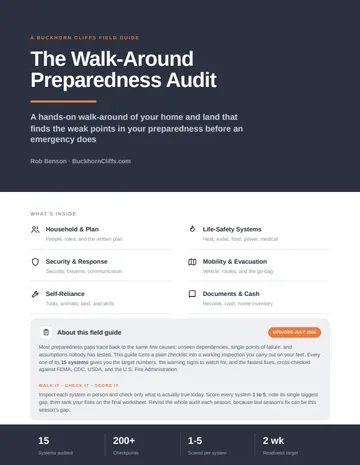
Every recipe and resource from the Prepper's Chemical Survival Guide, all six field guides to read here and download, the full audit and logbook, all twelve reference charts, and no ads.
My Manual · included
Build your own field manual
The most useful thing a membership gives you. Save any page on this site, recipes, charts, and whole field guides included. Arrange them in the order you want, name it, and print one manual with a cover and contents, or keep it as a PDF that opens with no signal.
- It works when this site does not
- Only your pages
- Anyone in the house can use it
- One current copy, not a pile of printouts
- The house binder
- A copy for the bug-out bag or truck
- A copy for family
- An offline PDF


Stay Ready
New entries, updates, and useful instruction.
Stay one step ahead on your preparedness journey.